

The Nostril Piercing is what is commonly known as a nose piercing. In the world of body art, it is, without a doubt, the most iconic, famous, widespread, and popular piercing.
Right after ear piercings, the nostril piercing is generally chosen as the “first piercing of a lifetime”, especially among young people.
The Nostril Piercing has very ancient origins. Its history begins in India, where it was an integral part of the original culture and was primarily chosen by women as a symbol of beauty.
Furthermore, if done on the left nostril, it was a kind of amulet to facilitate childbirth and improve fertility.
In the Middle East and North Africa, however, this piercing was an emblem of wealth and high status, while the early American peoples practiced it for spiritual reasons and as a sign of strength and courage.
During the 1960s and 1970s, the Nostril Piercing began to spread in the West, first as an icon of cultural rebellion and then, during the 1990s, as a major fashion trend.
How to Perform a Nostril Piercing Perfectly
The Nostril Piercing involves perforating the nostril, exactly along the curve, where the jewelry is then inserted. It can be done on both sides of the nose or in a central and lower position, depending on personal preferences and the jewelry one wishes to insert in the future.
The procedure for performing a Nostril Piercing perfectly first involves preparing the area. The Piercer must thoroughly clean the nostril to remove any bacteria and thus avoid possible risks of infection.
After that, with the aid of a sterile marker, they will mark the exact spot where the piercing will be made. As simple as this step may seem, it requires extensive knowledge of nasal anatomy, as well as excellent listening skills to the Client’s requests and aesthetic preferences.
The actual piercing then proceeds: using a sterile, single-use cannula needle, the Piercer makes the hole in the nostril, cuts the cannula with sterile steel scissors, and immediately inserts and secures the jewelry, which is generally a labret stud with a flat back and a ball/gem on the outside, or spiral jewelry whose internal part will be recognized by its “S” shape.
The quality of the jewelry is fundamental for the healing of the piercing, but also for its stability over time. It is therefore essential to always choose materials considered safe and compatible with the human body, especially for fresh piercings, so always prefer titanium.
The healing time for a nostril piercing ranges from 2 to 12 months. During this period, also to avoid infections, it is essential to:
- regularly clean the piercing without using chemical products
- do not touch the jewelry with dirty hands and do not manipulate it excessively
- do not sleep on the side of the piercing, especially in the first few days after the piercing
- avoid pools, hot tubs, and the sea for at least 2 weeks.
Common Problems and Mistakes in Performing a Nostril Piercing
Although the Nostril is a simple type of piercing to perform, there are a number of possible mistakes that should not be made during its execution.
First of all, it is absolutely incorrect and ill-advised to perform this nostril piercing with a piercing gun instead of a needle: it is an instrument that exerts great mechanical force and risks causing damage to the nose.
The consequence could be the onset of infections and scars, soft tissue injuries, and the appearance of keloids.
Another mistake to avoid is the incorrect placement of the piercing, caused by rushed and careless work or a poor understanding of the anatomy and structure of the nose.
This can result in uncomfortable placement for jewelry insertion, subsequent changes, and difficulty cleaning the piercing.
Piercers performing Nostril piercings must also have great expertise in piercing jewelry. The choice of product is indeed fundamental to avoid any type of complication, even future ones.
A common mistake is using jewelry made of poor quality materials that are unsuitable or of inadequate size for the nose. This can cause irritation, allergic reactions, and infections, as well as swelling and pain.
It is always best to prefer titanium as the material for both the initial jewelry and replacement pieces.
Finally, the last mistake a Piercer must avoid when performing a Nostril Piercing is not giving the Client the correct instructions on aftercare.
This is an essential procedure to ensure that, once they’re home, the person strictly follows all hygiene practices and the piercing heals properly.
Furthermore, this also serves to provide exact timelines for jewelry replacement, which should only occur when the piercing is completely healed.
There are products specifically created for piercing aftercare, such as:
- CURE YOUR PIERCING for fresh piercings
- CLEAN YOUR PIERCING for maintaining healed piercings
Other Types of Nose Piercings
The Nostril is not the only type of nose piercing that exists.
When the piercing is made at the base of the nasal septum, we are dealing with a Septum Piercing.
To create it, the cartilage is not pierced, but a very thin layer of tissue (“sweet spot” area) that crosses the nasal septum and separates the two nostrils, where the jewelry is then applied.
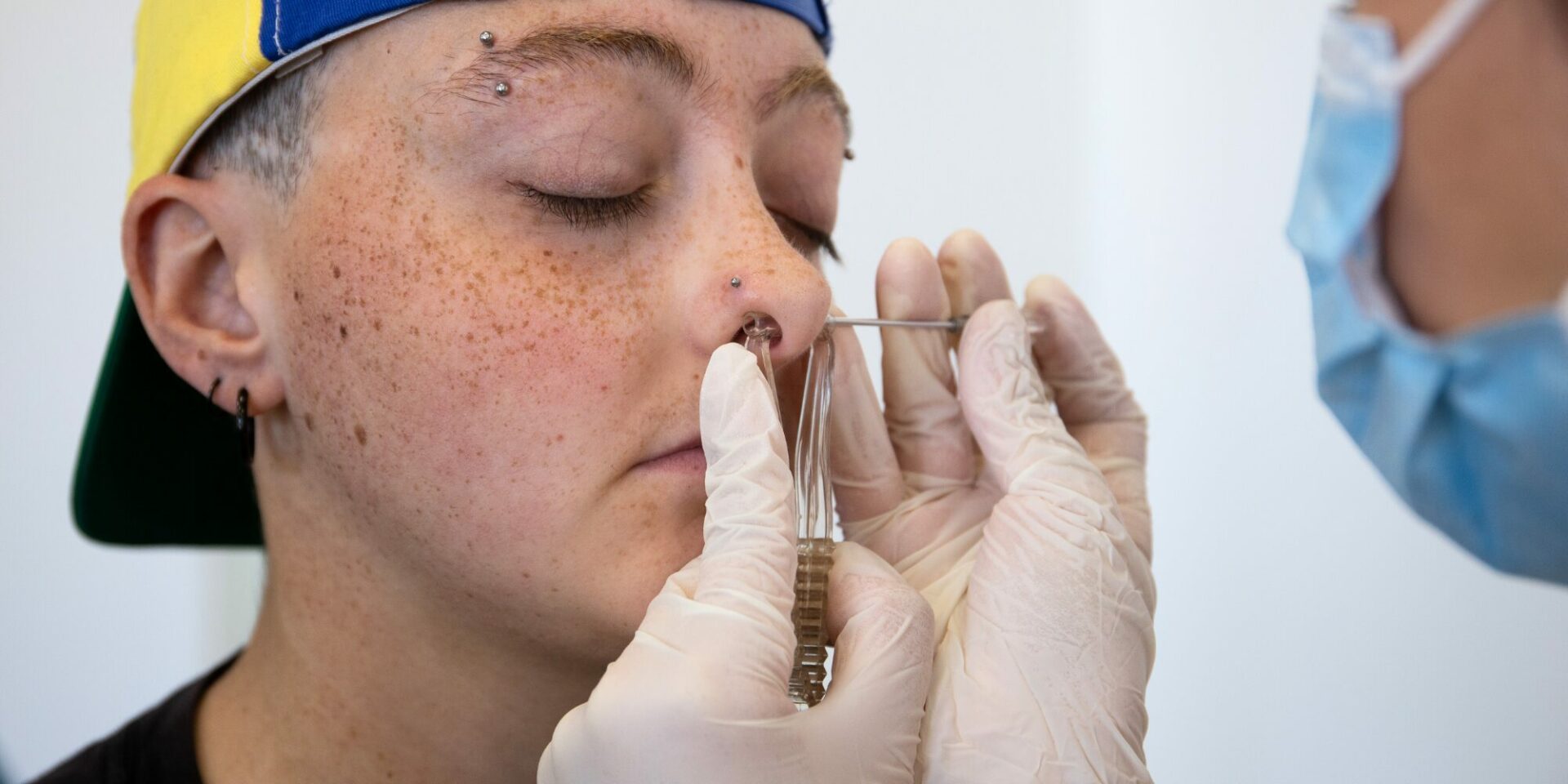
After thoroughly cleaning the area, the Piercer marks the piercing’s position to ensure precise placement.
After that, using a sterile, single-use needle, the membrane is perforated, and the jewelry is inserted. As this area does not contain much cartilage, the pain is often less than with other nose piercings and is similar to a sharp, brief pinch.
Complete healing of a Septum piercing usually takes 6 to 8 weeks. During this period, it is important to avoid trauma to the area and meticulously follow aftercare instructions.
For optimal care, we recommend washing and disinfecting the piercing daily, morning and evening, for 20/30 days. Avoid aggressive products, never touch the piercing with dirty hands to prevent infections, and do not change the jewelry before a couple of weeks if you rely on a professional, and about a month if you do it yourself, to allow for proper healing.
An wide variety of jewelry can be used for Septum piercings, but the most common are: horseshoe rings (open with 2 balls), simple closed clickers, those with minimal and/or eccentric decorations, and captive bead rings, which can be chosen according to one’s aesthetic taste.
You can then choose the ideal size with your piercer so that the jewelry fits according to the client’s request.
Loved by young people, a symbol of nonconformity, and the ultimate icon of distinction is the Bridge Piercing, a type of piercing placed in the upper part of the nose, between the forehead and the indentation separating the eyes.
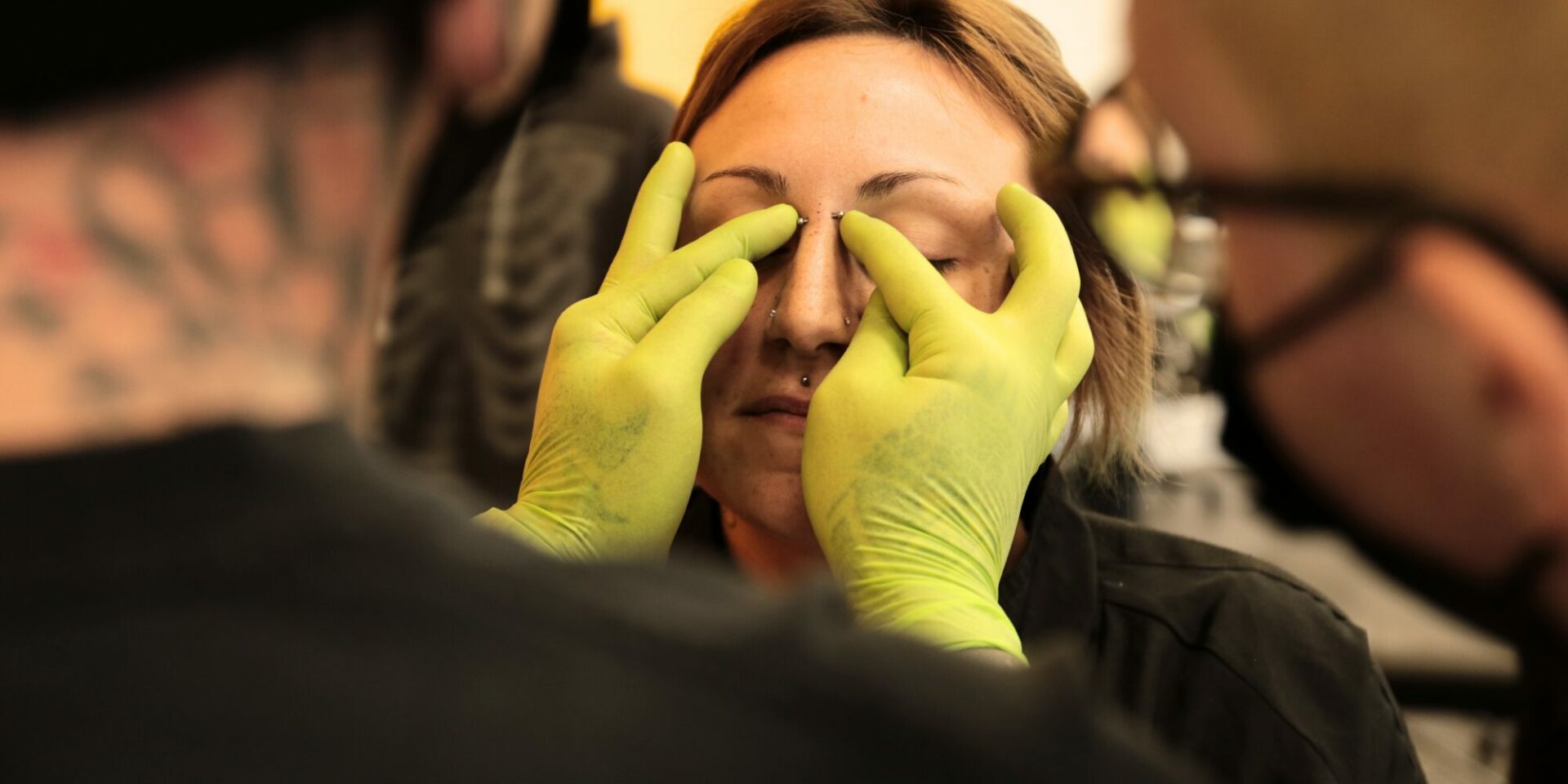
Consisting of two holes, with a titanium bar passing under the skin and two small pieces of jewelry at the ends, the Bridge Piercing is perfect for highlighting the eyes.
It is not a painful piercing and has relatively short healing times compared to other types of piercings.
Furthermore, being in an area highly exposed to pollutants, dust, and makeup, it must be cared for daily with extreme attention (even twice a day initially).
Milano Tattoo School is the Go-To School for Aspiring Professional Piercers
Milano Tattoo School represents the starting point for all young people who wish to pursue a career as a Piercer in Italy or worldwide.
The Piercing Operator Course at MTS is a comprehensive and professional training program that spans a total of 1500 hours.
Among the subjects covered are fundamental disciplines such as history of art and body modifications, to understand the cultural evolution of piercing; anatomy, essential for performing safe and targeted procedures; and piercing hygiene and care, crucial for preventing infections and post-procedure complications.
An area of particular interest is gemology and the jewelry workshop, which prepares future piercers to recognize and use high-quality materials for piercing jewelry.
Alongside theoretical lessons, the course includes a practical component that features technical demonstrations, exercises on anatomical silicone models, and subsequently, practice on human models to learn the execution techniques for the most commercially requested piercings.
What also makes this program unique are events, workshops, and seminars with high-profile international artists.
These meetings allow students to interact with established professionals in the piercing industry, expanding their skills through direct experiences and discussions with those who have built successful piercing careers.
Finally, students have the opportunity to complete an internship in piercing studios affiliated with the school, where they will put what they have learned into practice in a professional environment.
At the conclusion of the course, a Regional Certification is issued, attesting to the acquired skills and valid for pursuing the profession.
There is a second course dedicated to Piercers, shorter and very intensive: we are talking about the Technical Piercing Course, with a total duration of 30 hours, taught by Dimitri Daleno, a pioneer of piercing in Italy.
Developed over 4 days of intensive training, it is intended for:
- Beginner Piercers: the course allows them to enter this sector and learn techniques and practices, performing some of the most common and popular piercings on people.
- Professional Piercers: the course allows them to delve deeper into tools, procedures, processes, and discover all of Dimitri Daleno’s professional secrets.
If you are looking for your opportunity to enter the world of piercing through the main door, Milano Tattoo School’s piercing courses are the right opportunity!
Want to become a professional piercer?
Discover all the courses at Milano Tattoo School