

Today, piercings are an art form that involves practically every part of the body and continues to evolve with new and innovative, avant-garde trends arriving from all over the world, immediately becoming trends to follow and imitate.
However, there is a traditional type of piercing that never goes out of style and remains one of the most popular and requested choices: we are talking about all types of ear piercings.
Even in this case, though, there isn’t just one type of ear piercing; there are several versions:
- Lobe Piercing
- Tragus Piercing
- Daith Piercing
- Helix Piercing
- Rook Piercing
- Conch Piercing
- Industrial Piercing
In this article, we analyze the various types of ear piercings and their technical execution.
1. Lobe Piercing: The Classic and Versatile Ear Piercing
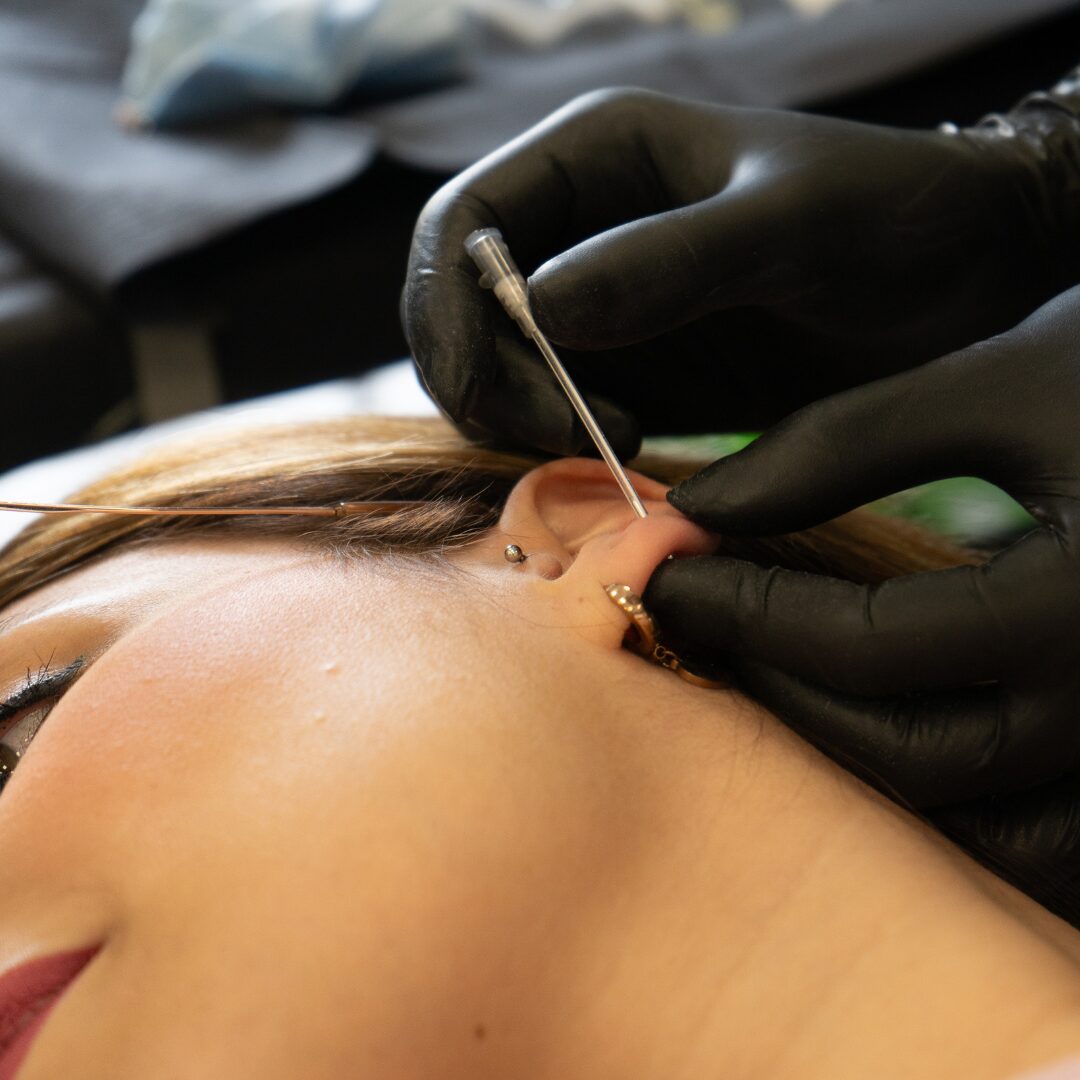
Let’s start with the most classic and widespread ear piercing, now visible on everyone of all ages (including young children): the lobe piercing, also simply called an “ear hole.”
This piercing can be a bit annoying during healing, as it’s very receptive, and the healing time can last a few months, though for the luckiest, it may heal in just one month. It involves the perforation of the earlobe, which is the fleshy part at the lower end of the auricle.
It is performed using a sterile disposable cannula needle and can be done in different positions along the lobe, while the inserted jewelry can have different shapes and sizes.
2. Tragus Piercing: Elegance for Your Ear Piercing
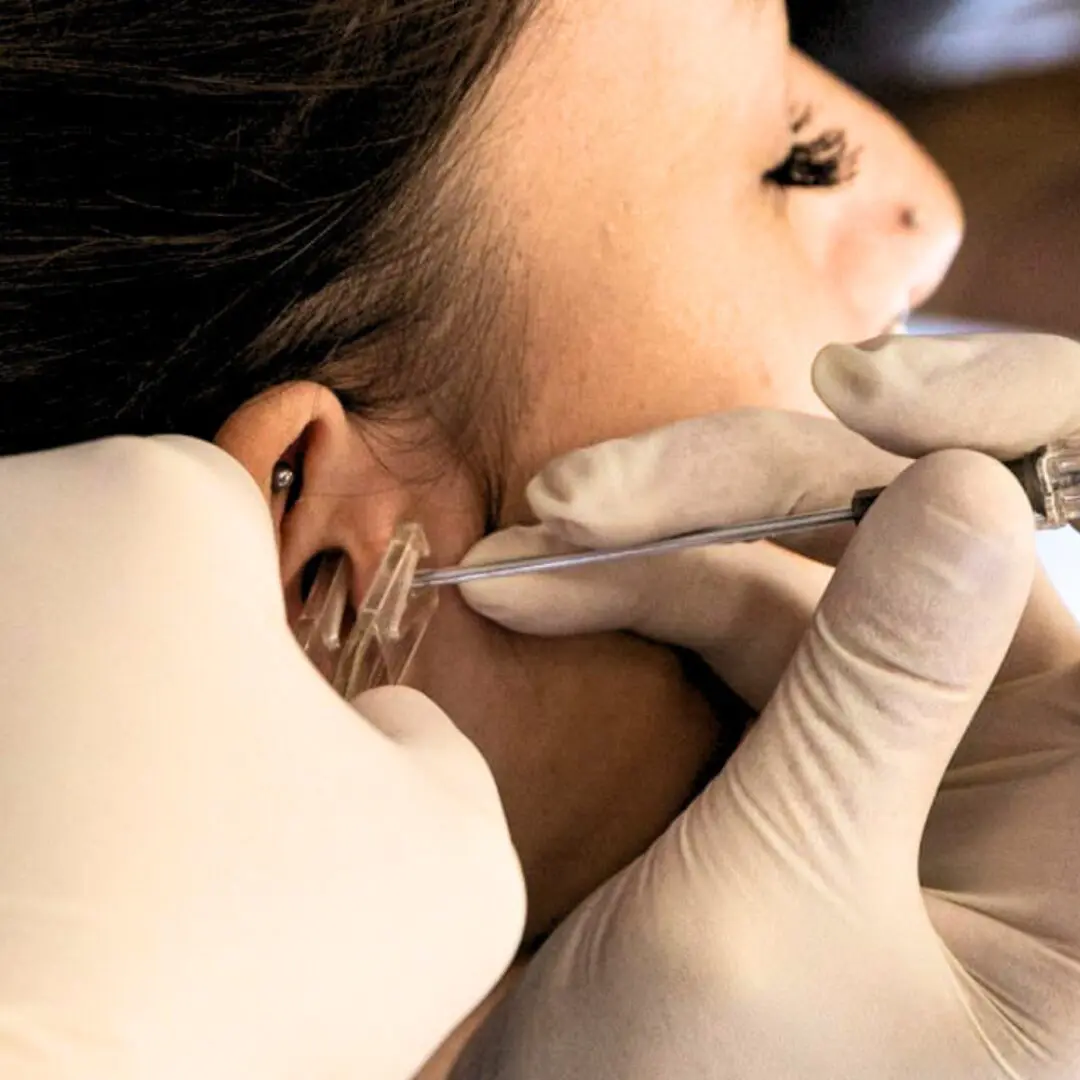
The Tragus Piercing (also called “tragus”) is a type of ear piercing that requires the perforation of the tragus, which is the piece of cartilage located in front of the ear canal.
It can be classic (central, with a titanium barbell) or double, with 2 piercings on the same tragus, one below the other, for a great visual impact.
Performing it requires excellent technical skills and great dexterity: after analyzing the area and the anatomy of the tragus and marking the exact point to pierce, the cartilage is grasped using sterile forceps, the cartilage is pierced with a gray cannula needle, and jewelry is immediately inserted, then the plastic cannula is removed, and the ball is screwed on.
The tragus piercing is not very painful and requires several months to heal completely. However, it largely depends on each client’s body.
3. Daith Piercing: An Original Ear Piercing
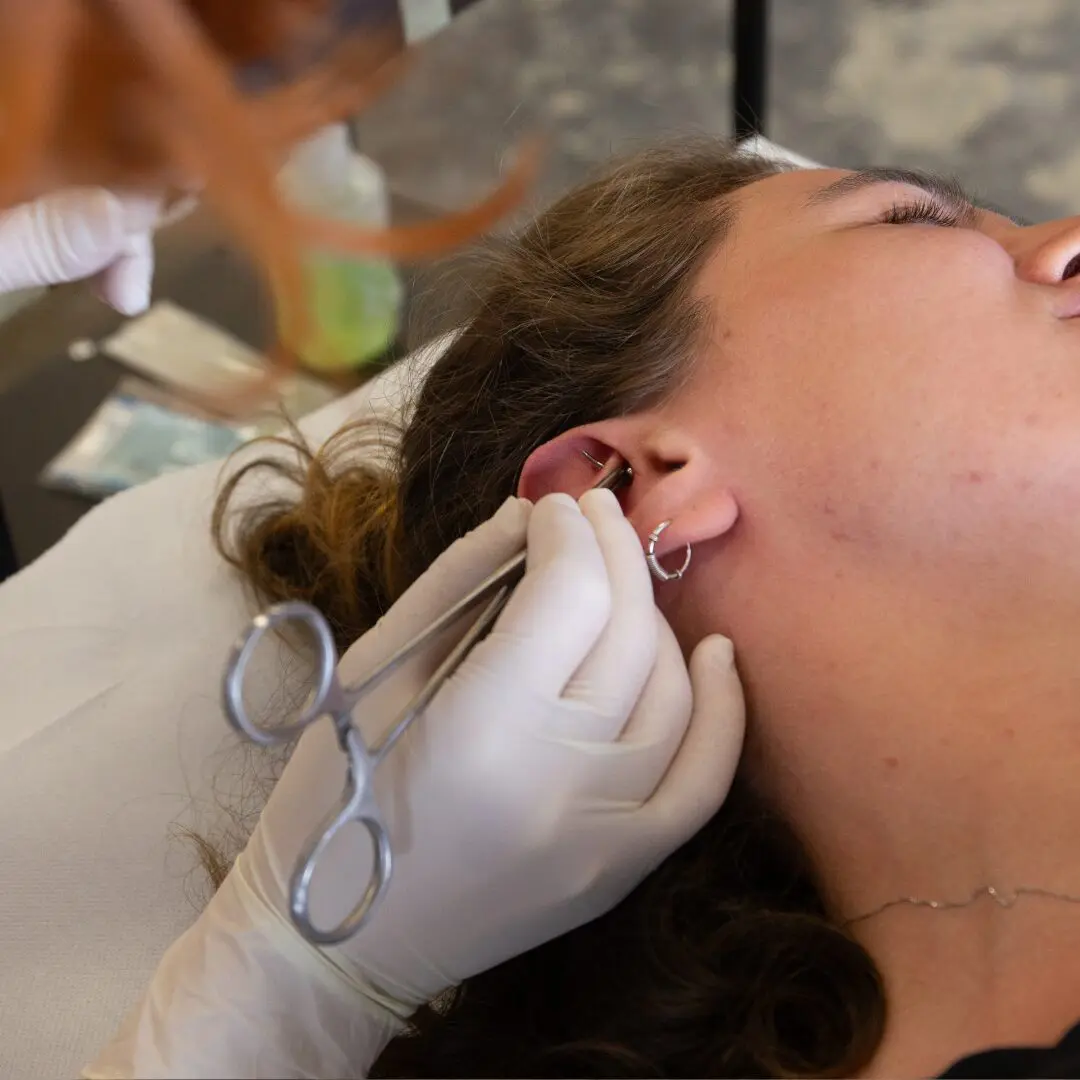
The Daith Piercing is a piercing located in the part of the ear just above the ear canal, next to the tragus and the attachment point.
Since it is a thin and small area, it can often heal very quickly, also thanks to its somewhat hidden position, but it can often be painful during execution.
The piercer proceeds with the piercing of the helix root, the fold of cartilage inside the auricle, with a curved cannula needle (as it is a closed and difficult-to-reach area) and inserts a titanium curved barbell to be as minimally invasive as possible during the initial healing period.
Healing time ranges from one month to a year, depending on the individual’s body.
4. Helix Piercing: The Ear Piercing with Style and Individuality
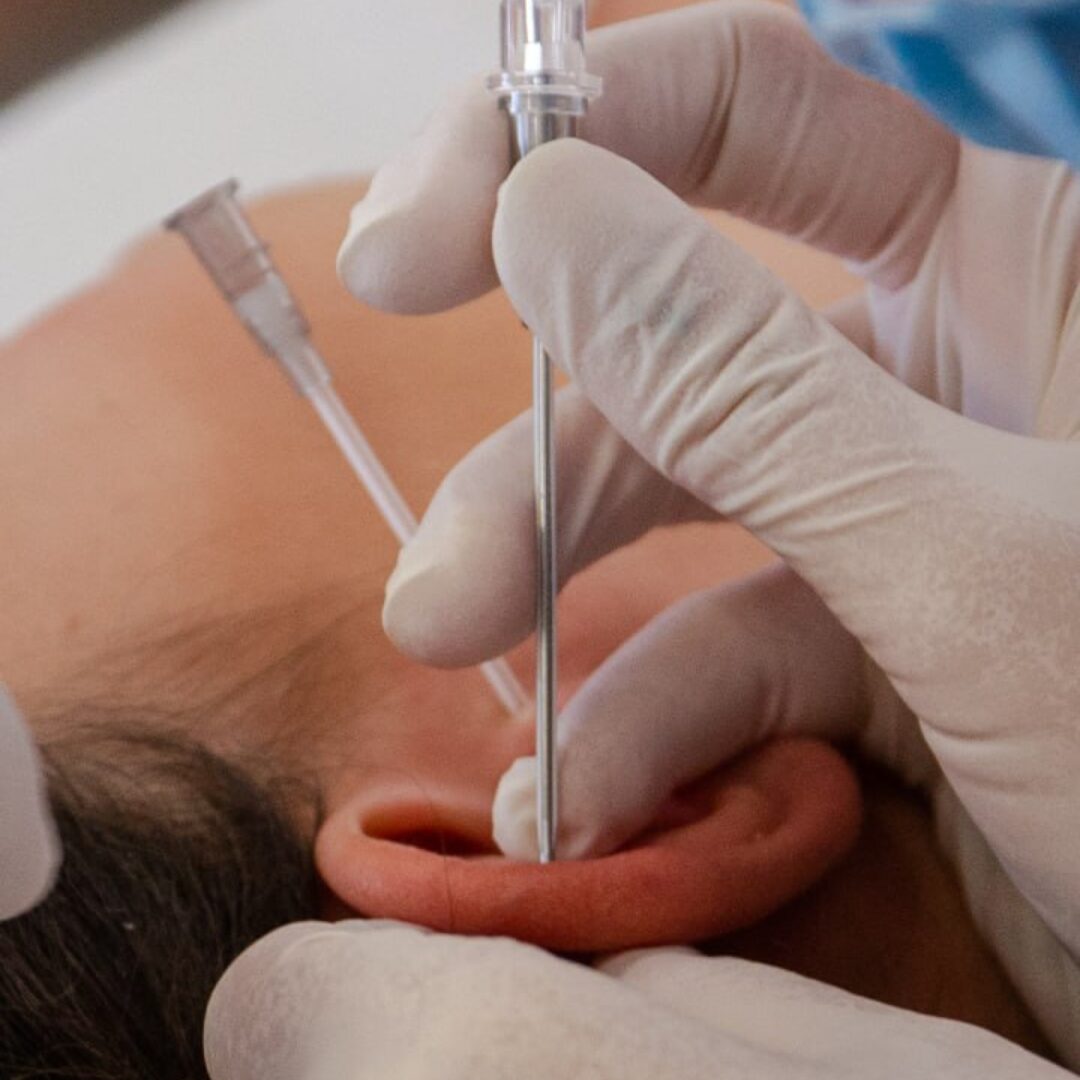
The Helix Piercing is one of the most sought-after ear piercings: it is performed in the upper part of the auricle called the helix (the hard rim of the ear) and can be decorated with an infinite variety of jewelry (hoops, studs, straight or curved barbells, etc.), although the ring remains the most popular choice.
The Helix Piercing consists of piercing the cartilage in the upper part of the ear. There is no precise spot; it can be placed at different heights.
After identifying and marking the exact piercing spot outside the “curl,” in the flat part of the ear, the hole is made manually with a sterile disposable gray cannula needle so that the cutting edge passes through the area at 90 degrees.
Once the needle is inserted, the chosen jewelry, which is technically a titanium barbell, is placed in the hole.
Healing depends on the person, but generally, as it is a cartilage piercing, several months are needed for complete healing, following a strict maintenance routine to optimize healing and avoid any problems.
About 1 month later, it is possible to change the piercing, but it is definitely recommended to wear the initial jewelry for a longer period.
Similar to the helix, another very popular piercing is the Flat, which is positioned near the helix area but further inward to accommodate larger pieces of jewelry that fill more space on the ear.
There is also the anti-helix piercing, which involves the cartilage fold located halfway up the ear, on the outer part.
5. Rook Piercing: Unique and Distinctive Among Ear Piercings
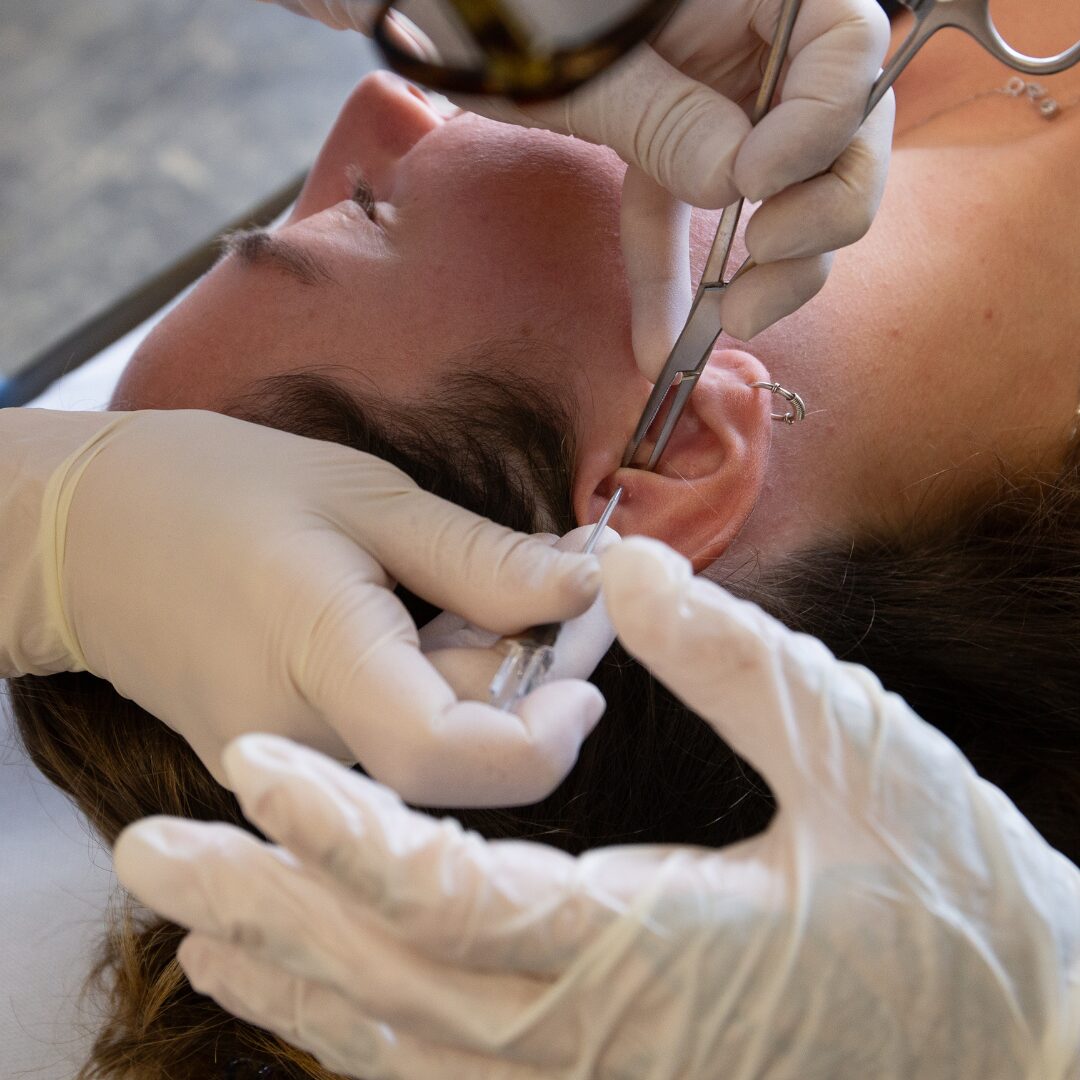
The Rook Piercing, on the other hand, is a rarer and more unusual type of piercing: it is performed in the highest part of the cartilage fold inside the auricle (above the tragus and near the helix).
It is performed manually with a gray cannula needle, which passes through a very receptive layer of cartilage, making it more painful than others and with a relatively long healing period (generally 6 to 12 months).
The perfect jewelry for a Rook Piercing are the ring and the curved barbell (“banana”), although initially a long curved barbell is inserted to accommodate swelling during the first healing phase.
6. Conch Piercing: Depth and Charm for Your Ear Piercing
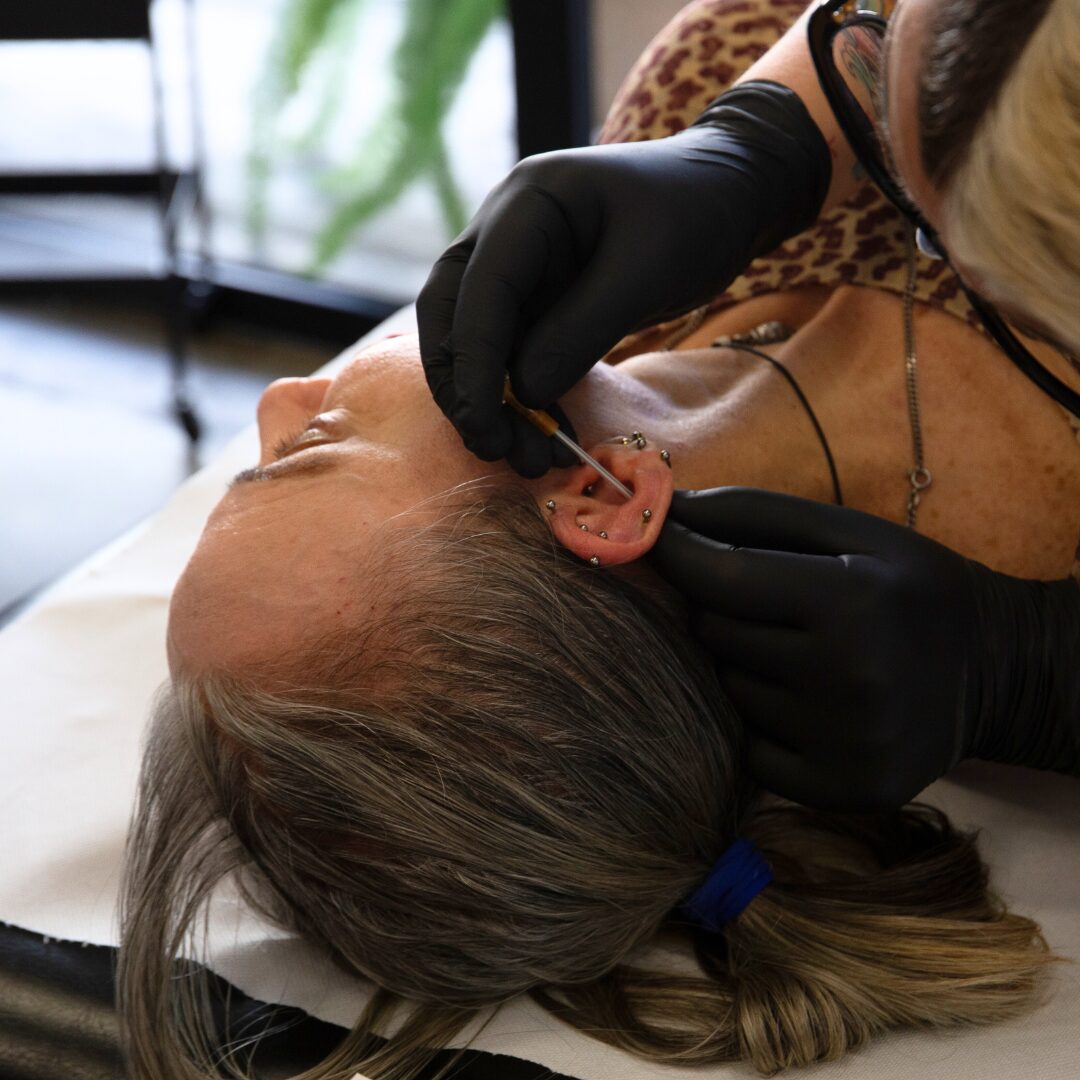
The Conch Piercing is performed in the concha of the auricle, the outer “shell” of the ear, and can be placed in different spots, depending on personal taste, the conformity of the area, and also the client’s desire to later insert a hoop or just a single piece of jewelry during a change.
From this, it is distinguished between Outer Conch Piercing (the piercing is inserted near the ear’s curvature) and Inner Conch Piercing (the piercing is located towards the entrance of the auricle).
To perform it, the piercer pierces the cartilage on the edge of the ear itself or slightly inward (antihelix) using an orange cannula needle and making the hole by hand: this is a fairly rigid part, and for this reason, the healing time can reach up to 6 months.
7. Industrial Piercing: Audacity and Iconicity in Ear Piercing
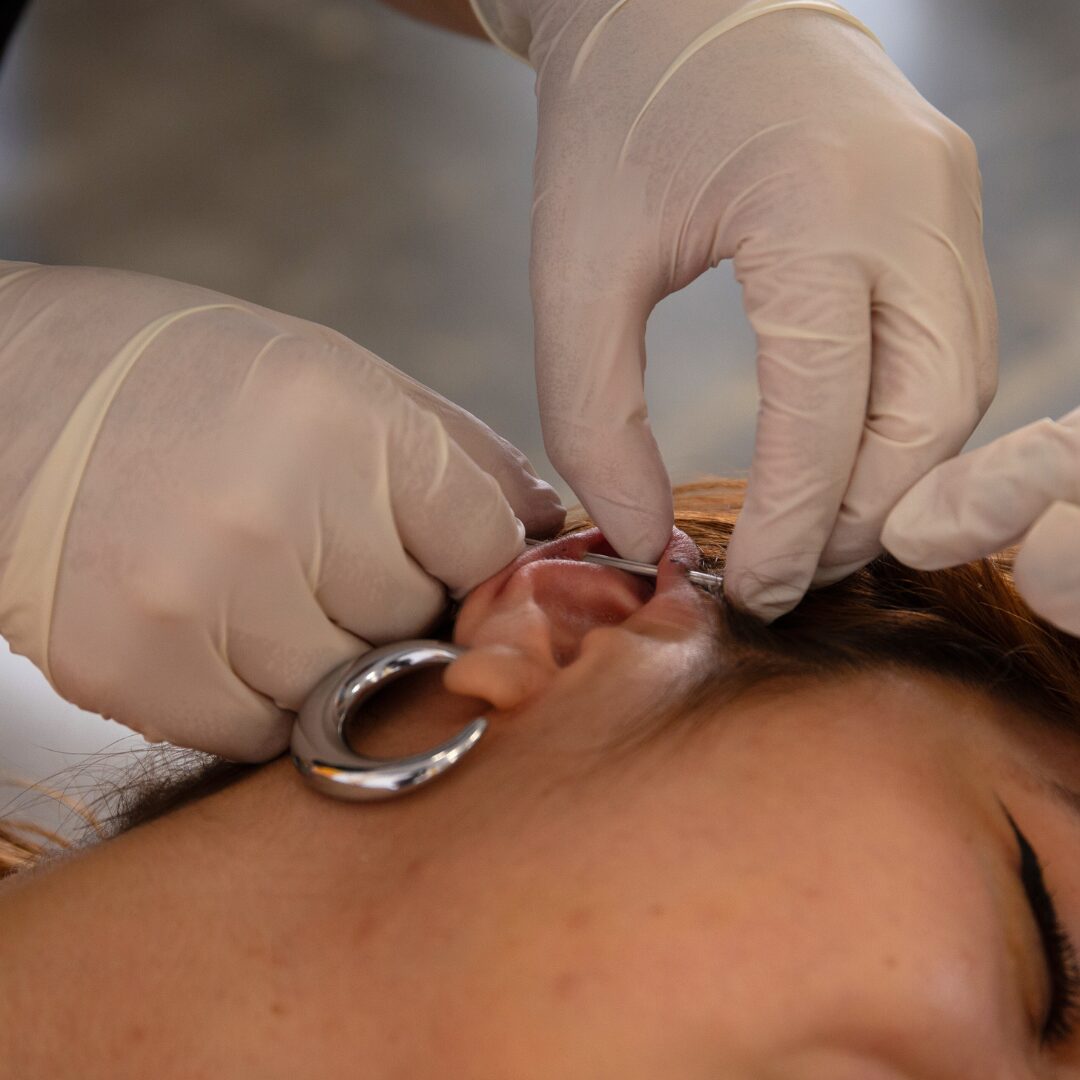
The Industrial Piercing is perhaps the most distinctive ear piercing there is.
It is created by piercing the helix in two places, and the inserted piercing, which consists of a titanium bar with two balls, passes transversely through the auricle from side to side.
It is, in fact, considered one of the longest-healing piercings.
The piercing must be impeccable, and the ear holes perfect: an orange cannula needle is used to make both holes to maintain the correct trajectory for a metal bar to pass between them, then completing the piercing with a round piece of jewelry at both ends.
The piercer must first analyze the ear not only to select the most appropriate position and angle for piercing the cartilage but also to understand if its size and shape are suitable for this type of piercing.
Why is it important to rely on professionals for ear piercings?
Regardless of the type of ear piercing, consulting qualified piercers not only ensures an aesthetically perfect result but also helps avoid potential problems, such as piercing infections or resolving inflammations that might arise from an invasive piercing.
First and foremost, a qualified piercer guarantees the piercing is performed in a clean and sterilized environment, the use of certified and high-quality tools and products, and adherence to all standards and practices to reduce the risk of contamination and infection.
Furthermore, getting pierced by a professional piercer also means being able to rely on maximum knowledge of human anatomy, which is fundamental for avoiding easy and quick rejections or problems and for understanding whether the piercing is feasible or not.
In addition, a qualified piercer provides in-depth consultation before, during, and after the piercing, offering all advice on aftercare, healing times, and any signs of complications that might occur.
Finally, getting pierced by someone with extensive experience in the field means reducing pain during the piercing, ensuring a safe and efficient procedure, and accelerating healing thanks to expert execution.
Discover all MTS courses to become a professional piercer
Milano Tattoo School represents excellence in the world of Piercing and the best choice for all those who wish to learn the art of piercing and turn it into a successful career.
Our School offers two different paths in the piercing sector.
The first is the Piercing Operator course which guides future piercers to acquire the knowledge, skills, and tools necessary to become professionals and work with total safety and precision.
The program, structured over 1500 hours, allows students to obtain the necessary qualification to start working, with the issuance of a professional certification, and to develop artistic, technical, and theoretical skills in 3 fundamental steps:
- Classroom lessons to acquire knowledge, skills, and tools
- Workshop sessions to gain technique and ability and practice by performing more than 50 piercings on real people
- Post-course internship to gain direct experience in a real Piercing studio
The course is led by Dimitri Daleno, a world-renowned Piercer with almost 30 years of experience, along with a team of professional instructors in the field of piercing, tutors, and highly experienced experts in training.
During the program, each student has the opportunity to participate in Workshops and Seminars held by world-renowned Piercers who collaborate with our School, to acquire advanced knowledge and further refine their artistic and technical skills, in close contact with the best professionals in the sector.
The second, shorter, is the 30-hour Technical Piercing Course.
This is an Intensive program over 4 days of lessons, to learn the techniques, practices, and tools necessary to become an expert Piercer, including:
- Basic principles of Dermatology and accurate tissue analysis
- Workstation preparation, material safety, equipment use
- Analysis of piercing jewelry types and application
- Piercing execution techniques with cannula needle, Free-hand, and forceps
- Illustration of problems during and after execution and specific aftercare
- Practical demonstration
- Piercing execution by the instructor, followed by piercing execution by students
The Technical Piercing course represents a unique opportunity for aspiring Piercers who wish to enter the field and already experienced Piercers who want to deepen their techniques, tools, procedures, and practices.
Want to become a professional piercer?
Discover all Milano Tattoo School courses