
Tribal tattoos, which draw inspiration from the traditions and cultures of the world’s oldest tribes and are characterized by abstract designs, thick lines, repetitive patterns, and black geometric motifs, are categorized as:
The differences, in addition to concerning the main meaning and subjects, also involve the type of execution.
In this article, we delve into the difference between decorative tribal tattoos and indigenous tribal tattoos.
What is a Decorative Tribal Tattoo?
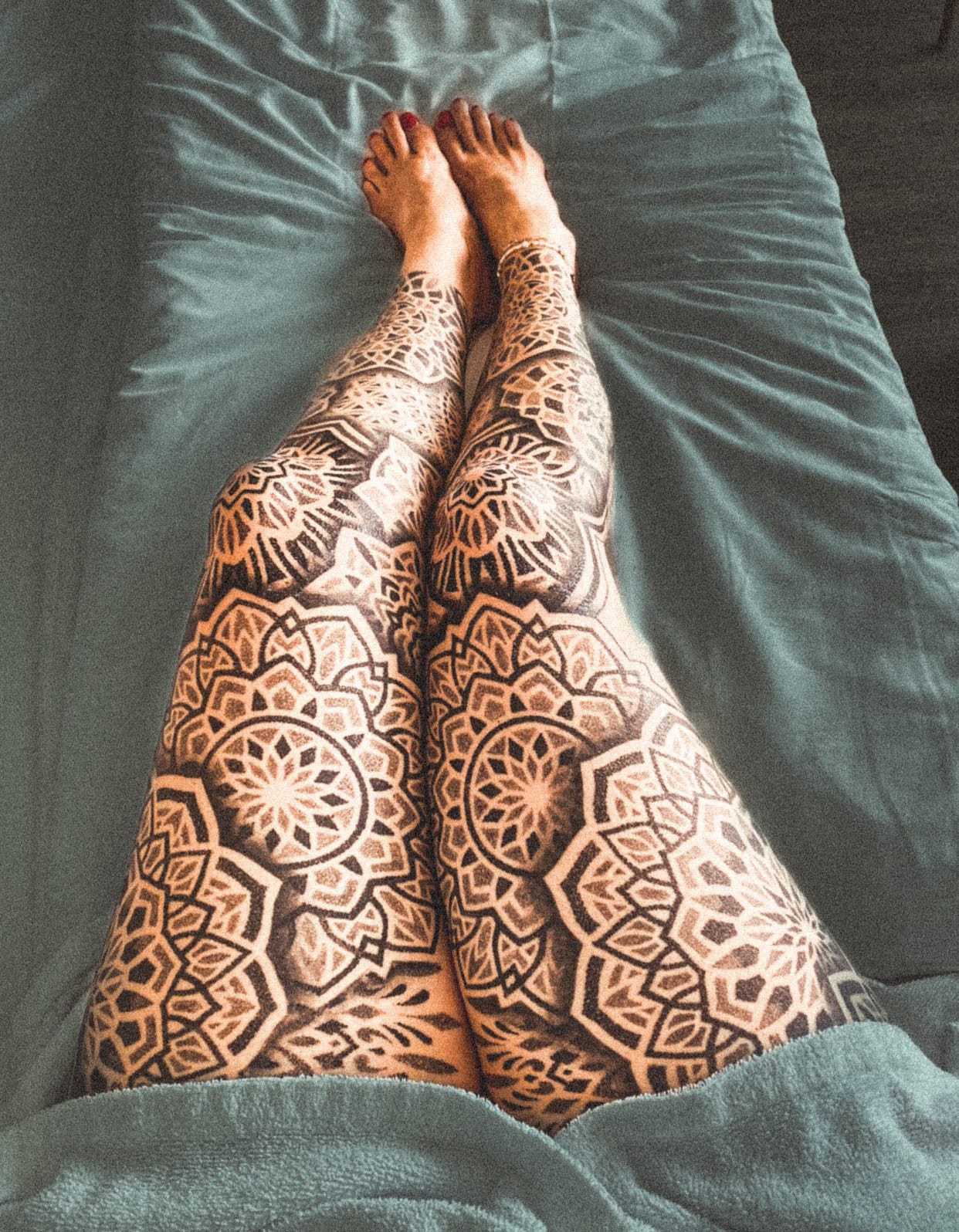
As the name suggests, decorative tribal tattoos have a purely aesthetic purpose: they are created to enhance a body area and emphasize musculature through an extensive and visually impactful design.
These tattoos feature bold lines, repeated and intertwined geometric patterns, and abstract shapes. Black is the predominant color, creating a sharp contrast on the skin, but it can be combined with other shades.
The subjects draw inspiration from tribal styles and motifs, but with a purely decorative value, without incorporating the deep symbolic and cultural meanings typical of traditional ones: the sole purpose is to create a visually appealing tattoo with significant aesthetic impact.
Execution also takes greater liberties and does not follow rigid rules: artists specializing in decorative tribal tattoos personalize designs by combining various tribal styles, incorporating contemporary elements and specific details, and adding colors other than black to create a unique tattoo.
The Most Popular Decorative Tribal Tattoos
Among men’s decorative tribal tattoos, the most common are abstract designs that, echoing the essence of traditional ones, give rise to highly imaginative and often invented tattoos, as well as depictions of animals, flowers, insects, and plants.
They are usually large in size, but recently the trend has shifted towards small decorative tribal tattoos, rich in points and curves.
As for the female universe, the most popular tattoos are floral motifs, animal images, and hieroglyphs chosen for their aesthetic beauty, strictly done in black and with stylized shapes. The most requested designs include the sun, gecko, hummingbird, lotus flower, and dragonfly.
What is an Indigenous Tribal Tattoo?
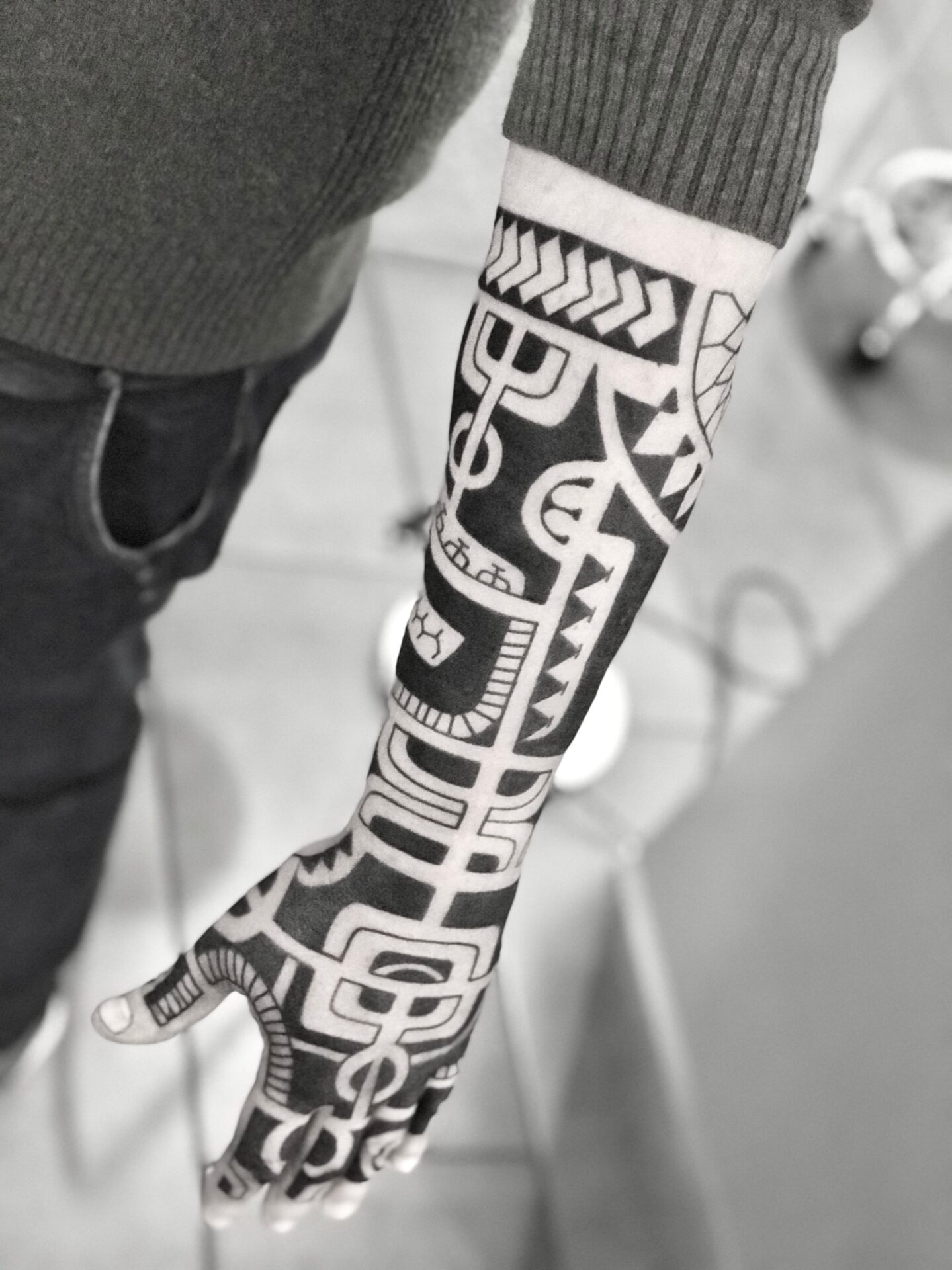
Unlike ornamental ones, indigenous tribal tattoos are rooted in the traditions of indigenous and tribal communities worldwide. They are created to evoke beliefs, values, and practices of the indigenous cultures from which they originated.
These tattoos are rich in symbolism, spirituality, and cultural value. They are made to express a precise identity and tell a specific story, and are strictly created with symbols that have a clear meaning: rites of passage, social status, community belonging, important events, etc.
The technique for creating this tattoo style is traditional and respects the original method: there are no customizations or additions, and each design has its precise placement.
The Most Popular Indigenous Tribal Tattoos
Among the most requested and popular indigenous tribal tattoos, we find:
- Indian tribal tattoos: the designs are ancient, created in geometric form on any part of the body, and include Hindu deities and goddesses, flowers, and animals (such as elephants, dragons, and tigers) to represent strength and power.
- Maori tattoos: originating from the indigenous culture of New Zealand, they are characterized by complex geometric designs and traditional symbols (“moko”) and have strong social, cultural, and spiritual significance. They are divided into Enata tattoos (which tell life experiences or symbolize social status) and Etua tattoos (related to the more religious and spiritual sphere).
- Cherokee tribal tattoos: originating from Native Americans, these tattoos primarily symbolize religion, respect, and love, represented by legendary stories and myths tattooed directly on the skin. Recurring figures include the wolf and the skull, and in terms of size, Cherokee tattoos are perfect for covering large areas of the body.
- Samoan tribal tattoos: with a very intricate design made of lines, shapes, geometric patterns, and symbols belonging to Samoan culture, executed freehand, this style represents power, pride, respect, and honor and has a particular charm. It requires maximum attention even to the smallest detail and a decidedly long realization process, but the result is an absolutely striking and highly impactful tattoo.
- Celtic tribal tattoos: with a predominance of designs representing birds and warrior-like animals, these tattoos are imposing and symbolize power and courage.
- Aztec tribal tattoos: created to symbolize Gods and warriors and to recognize belonging to different tribes, these tattoos are very intricate and varied. The most important and well-known represents Huitzilopochtli, god of war, the sun, protector of the heavens, and giver of life, usually depicted as a hummingbird or a warrior with armor and helmet made of his feathers.
How to Become a Professional Tattoo Artist with MTS?
I want to be a tattoo artist!
If this was your childhood dream and today it has become a concrete project you want to achieve, your “magic wand” is Milano Tattoo School.
Many of our Students arrive on the first day with this same dream and leave our School with all the skills, tools, and abilities to make it a reality.
How? Through a comprehensive 1500-hour course that provides:
- Technical and artistic preparation and 360-degree professional instruction
- High-level teaching staff
- Classroom lessons and laboratory sessions for practice on synthetic skin and live models
- Professional Certification valid throughout Italy and at a European level
- Internship opportunities at renowned studios in Lombardy
- Workshops and seminars with the most important international tattoo artists
We use high-quality equipment that meets the diverse needs of styles and tattoo types, thanks to Dormouse Tattoo Machine, which accompanies our Students on this journey.
If you want to be a tattoo artist, this is your chance: enroll in the course starting Monday, April 8, 2024!
Do you want to become a professional tattoo artist?
Discover the Tattoo Artist Courses starting soon
* The tribal tattoos in the photo are created by Tattoo Artist Kiavash, resident artist at Officina Tattoo & Piercing Studio and Instructor at Milano Tattoo School.