

The term labret piercing refers to any type of piercing involving the lips.
There are several styles, depending on the position of the piercing:
- Central Labret: positioned in the center below the lower lip
- Medusa Piercing: positioned in the center above the upper lip
- Side Labret: positioned on the side of the lower or upper lip, on the right or left (depending on the combination, they take different names including Monroe, Madonna, Snake bites, Angel Bites, Shark bites, etc.)
- Vertical Labret: 2 holes both involving the lower lip, one at the top of the lip and one at the bottom, with the jewelry passing vertically through the center
- Ashley Piercing: placed in the center of the lower lip with the exit point on the inside
- Dahlia Piercing: these are the 2 piercings located at the sides of the mouth near the corners of the lips
This is a piercing with ancient origins, used as a sign of social status, group belonging, or for spiritual reasons.
How the labret piercing is performed
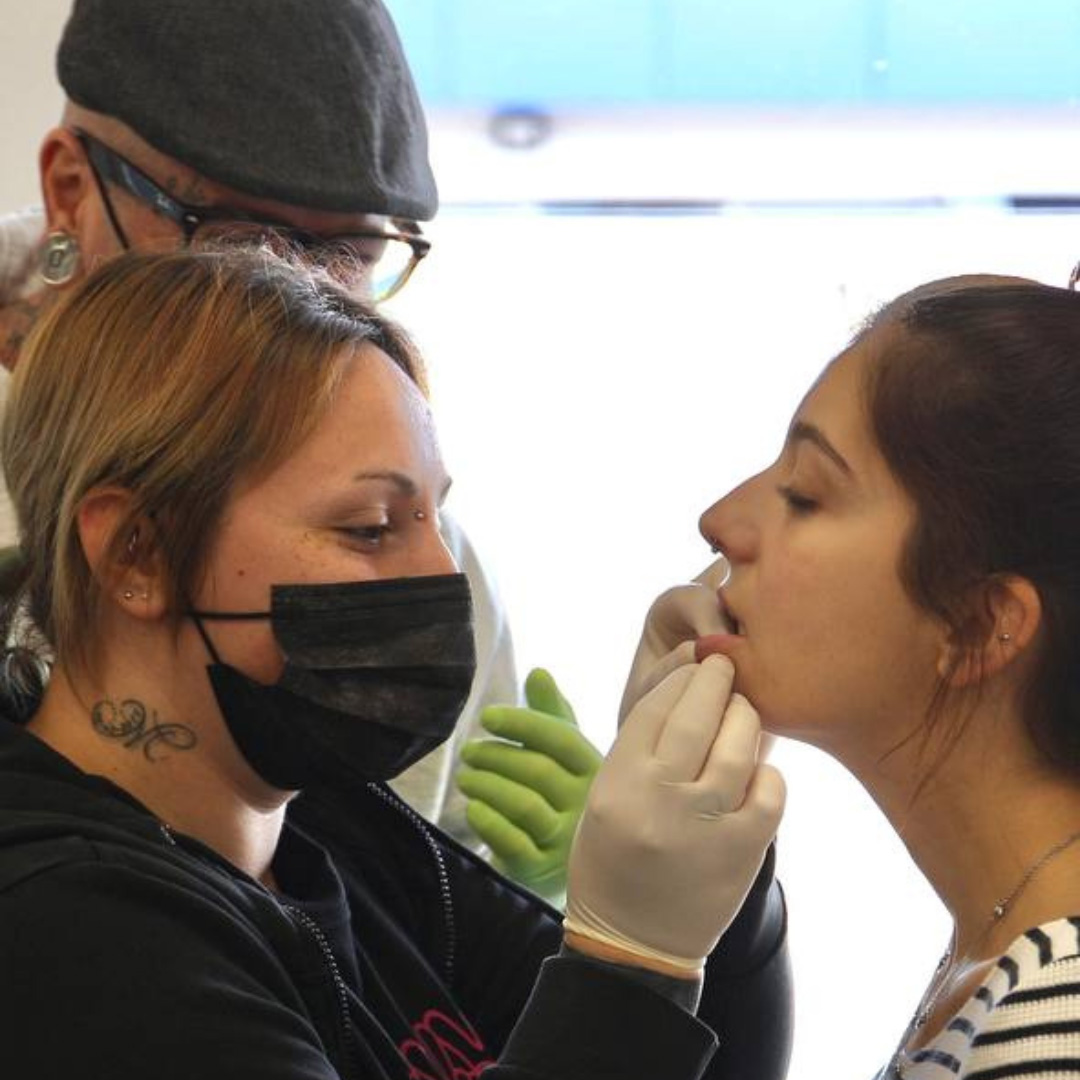
To perform a labret piercing, it is first necessary to identify the exact spot where the piercing will be placed, based on personal preference and the client’s anatomy.
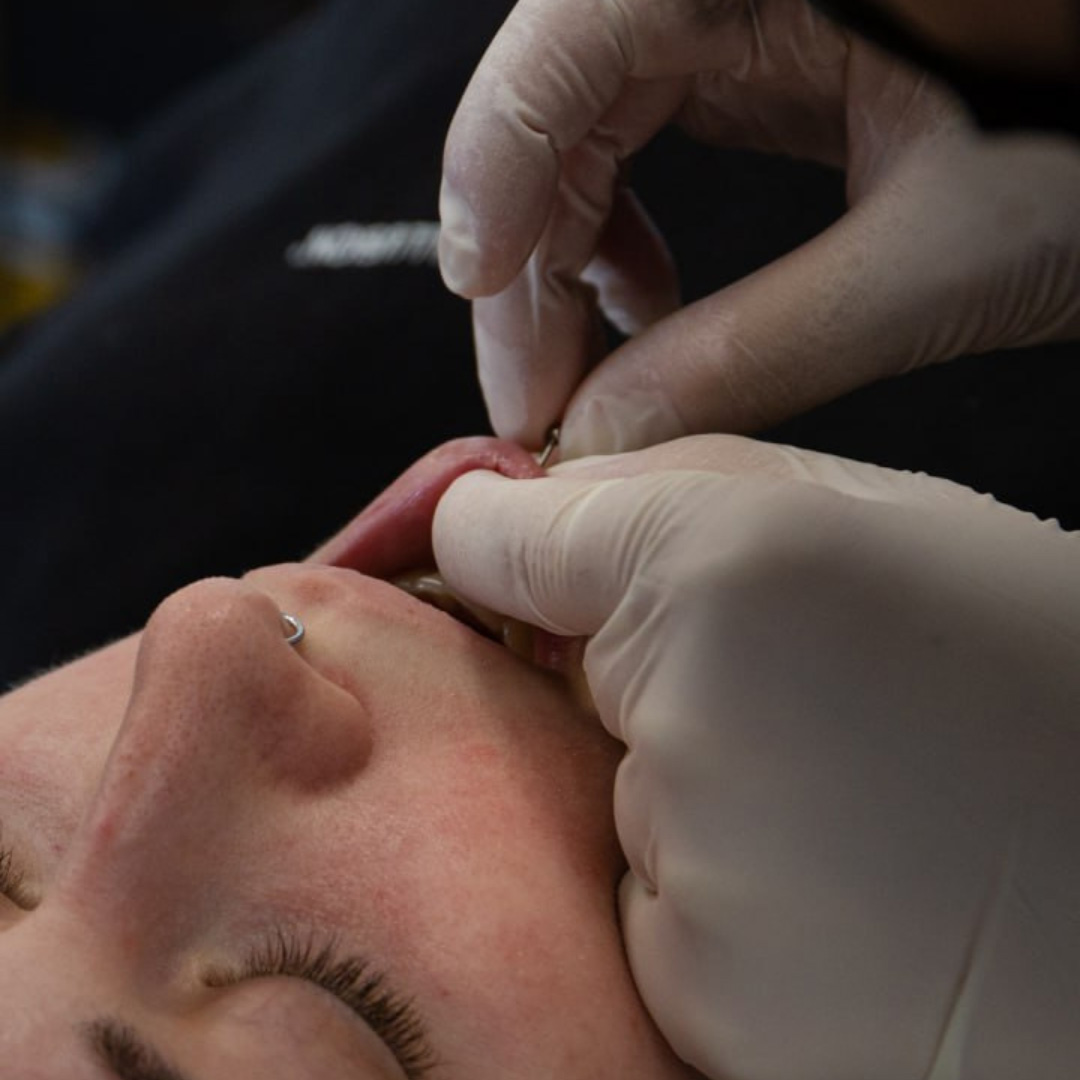
After carefully disinfecting the lip to remove any surface bacteria, the piercer marks the spot with a small dot, ensuring it is perfectly centered and correctly positioned.
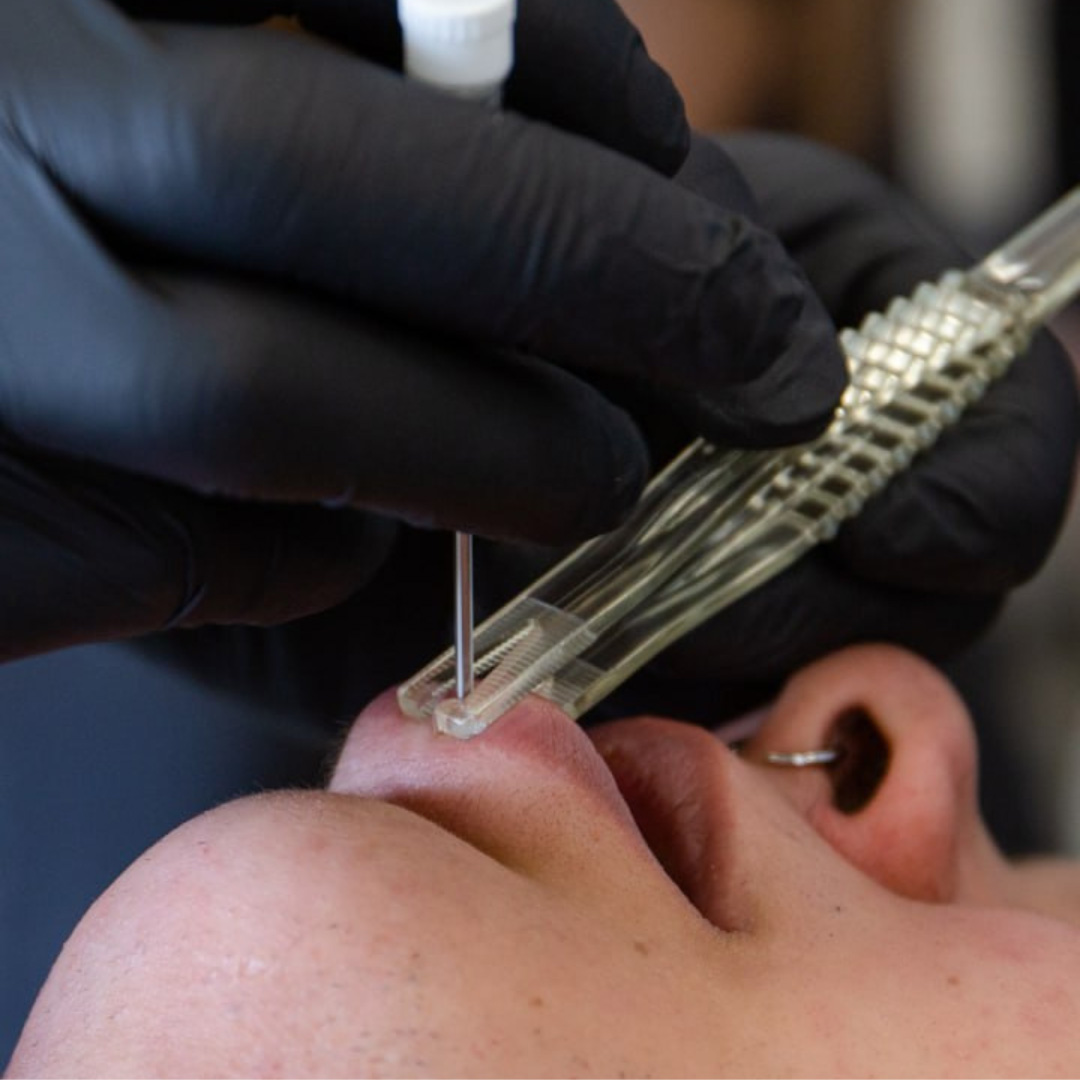
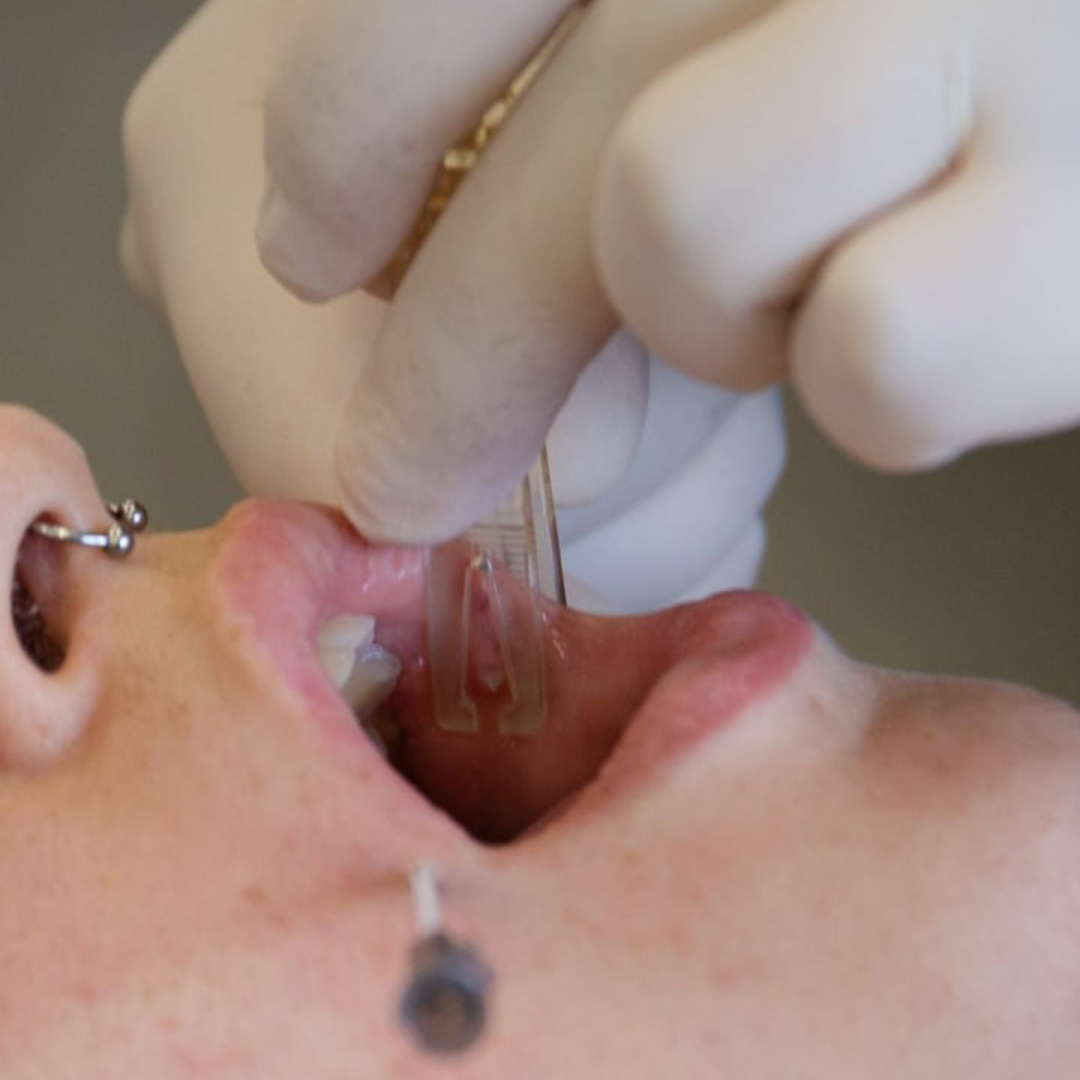
Using a grey cannula needle, the piercer will perform the piercing through the lip at the pre-selected spot. During this procedure, the piercer uses sterile forceps to hold the lip area securely, pulling it away from the inside to avoid damaging teeth and gums. It is important to maintain a 90-degree angle when passing the needle through.
Once the perforation is made, the jewelry is inserted with a flat disk on the inside and a ball on the outside (except for the vertical Labret, which uses a curved barbell), passing through the newly created hole.
At this point, the piercer will close the jewelry and provide aftercare instructions. It will be important to follow these instructions carefully to prevent infection and promote rapid healing.
Common piercer mistakes when performing a labret piercing
Since it is a lip piercing and therefore very common, the labret piercing may seem very simple to do, but it is not.
Performing this type of piercing actually requires great attention and skill from the piercer to avoid mistakes that could cause healing problems or complications.
For example, one of the most common mistakes in performing a labret piercing is incorrect placement: if the inserted jewelry is not centered, it risks ‘breaking’ the visual balance aesthetically, leading to an unpleasant result.
Technically, if the 90-degree angle of the hole relative to the lip is not perfectly respected, there is a risk that the internal flat disk will remain tilted and not sit flush against the lip tissue, damaging teeth and gums.
Choosing the right jewelry is also very important: opting for a piercing that is too short or too long can cause irritation or problems during healing, as can choosing jewelry made of a material other than those recommended.
Therefore, it is always better to choose titanium jewelry with a length that allows for just a couple of millimeters of extra space.
Finally, post-procedure advice is fundamental: only experienced piercers can provide the right aftercare instructions to ensure proper, timely healing and no unexpected surprises.
To avoid these mistakes, it is essential to rely on a professional piercer who operates in a studio that complies with the law and follows all mandatory hygiene and safety procedures.
What to avoid during labret piercing and how to manage potential issues
Since it is a piercing that involves the lips, like any other piercing, the labret can involve some problems and complications during its execution.
It is very important for the piercer to have good knowledge of human anatomy before piercing the lip area, which is rich in small capillaries but also larger vessels.
It is equally fundamental to reassure the client to prevent them from moving during the piercing process, which carries the risk of facial disfigurement and jeopardizing their health.
Labret piercing healing and aftercare: advice for the client
For a labret piercing, the healing period is about 15 days. During this time, it is normal to experience swelling, redness, and discharge of clear or yellowish fluid.
There may also be discomfort when eating and speaking because the initial jewelry is a bit long to accommodate any swelling that might occur.
The piercer should advise the client to disinfect the wound only externally and to maintain a high level of hygiene and cleanliness in the area. Furthermore, maintenance is very important: avoid bumps or trauma to the jewelry.
After getting a labret piercing, it is essential to take care of the pierced area to promote proper healing by gently washing the piercing twice a day and avoiding touching it with dirty hands. It is better not to wear jewelry that is too tight.
Finally, it is advisable to eat and drink only cold things during the first few days to avoid further swelling or discomfort. Additionally, a hoop should never be inserted during the healing phase: it is better to wait a month before choosing this type of jewelry, though shorter jewelry can be applied after just 15 days.
How to become a professional piercer and perform perfect labret piercings with Milano Tattoo School courses
If you want to become a professional piercer and would like to learn how to perform a labret piercing perfectly, Milano Tattoo School is the school that can turn your dream into reality.
Our 1500-hour Piercing Operator course is designed for those who want to enter the world of piercing and become professional piercers: led by Dimitri Daleno, a world-renowned piercer with nearly 30 years of experience, the program leads to developing an in-depth knowledge of techniques, equipment, and jewelry, as well as performing more than 50 piercings on people to gain experience and mastery of the craft.
Furthermore, it provides access to internships at the most important studios in Lombardy and the opportunity to participate in workshops and seminars held by the greatest artists in the industry.
At the end of the course, the mandatory Regional Certification is issued.
Do you want to become a professional piercer?
Discover all the Milano Tattoo School courses