

In the world of Body Art, there’s a form of piercing that is gaining increasing popularity.
We are talking about the Microdermal Piercing (also called a “Dermal Anchor”), a practice that involves applying a small piece of jewelry without piercing through the skin: the jewelry is actually “embedded” on the body, without passing all the way through like regular piercings.
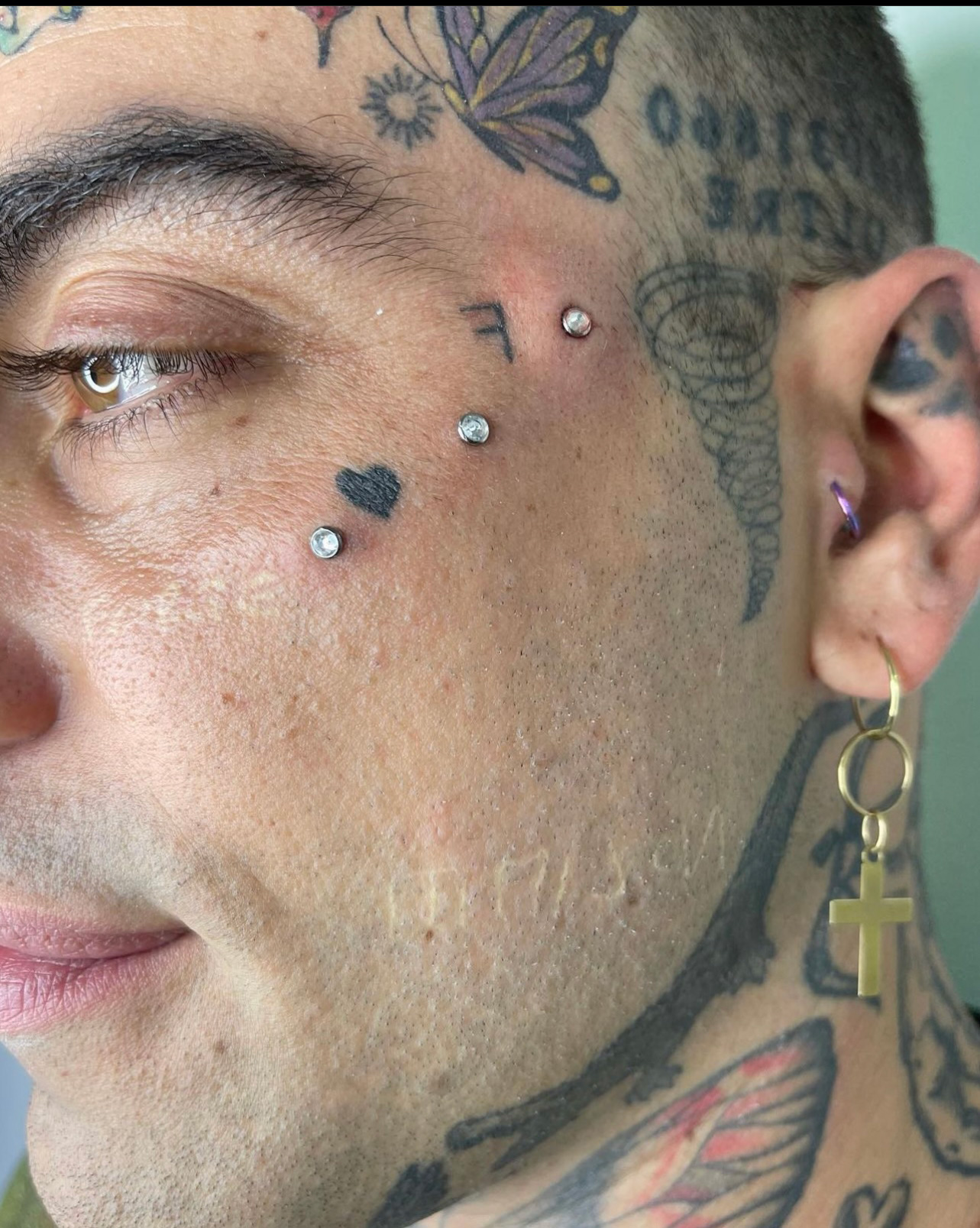
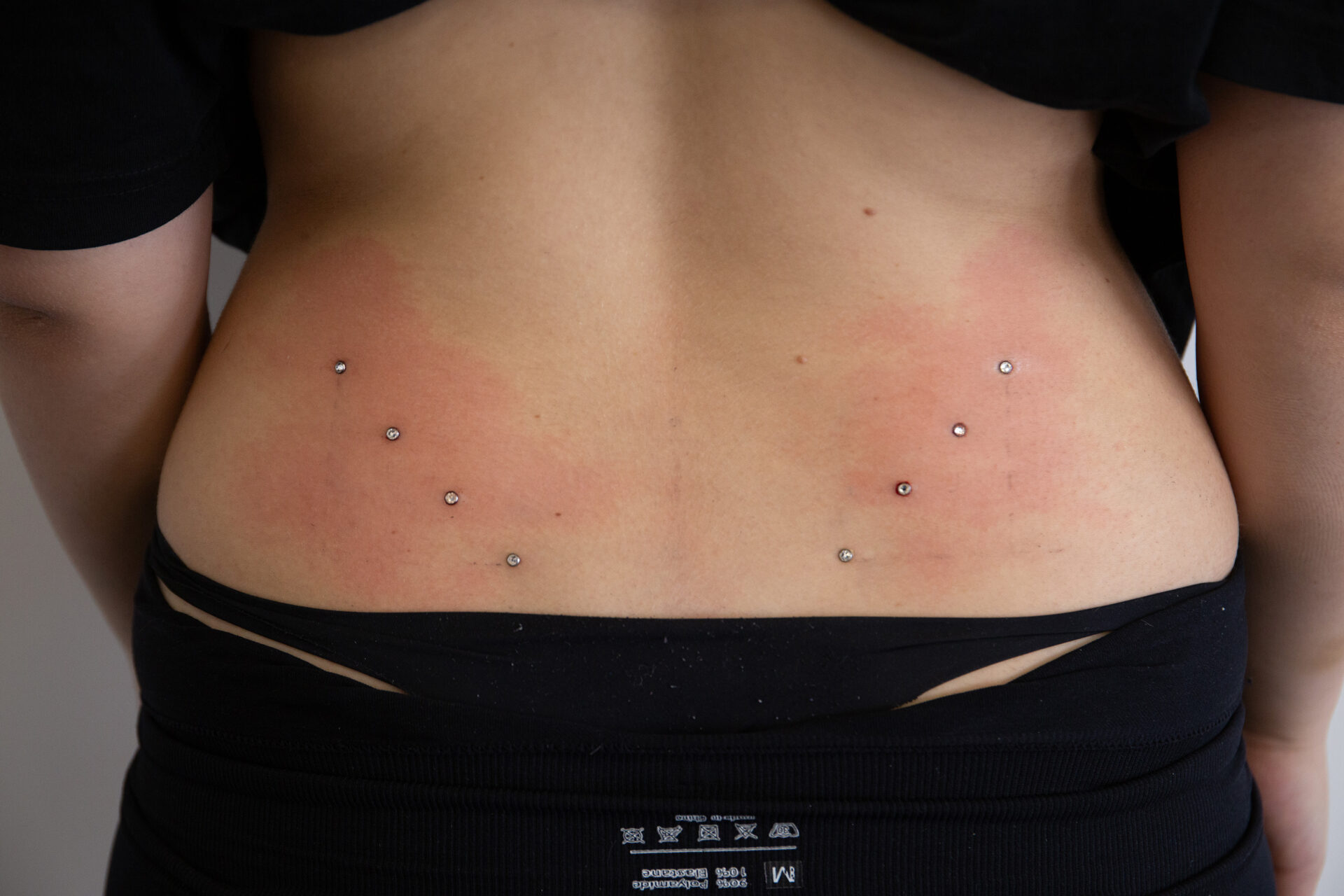
The Microdermal Piercing can be applied to different parts of the body and serves as an ornament, almost simulating jewelry on the body to create an extraordinary visual effect.
Its main characteristic is that it is a non-permanent piercing and can only be removed by a professional piercer.
The Microdermal Piercing represents the evolution of the classic piercing that we all know.
How a microdermal piercing procedure is performed
The Microdermal Piercing does not require the use of a needle.
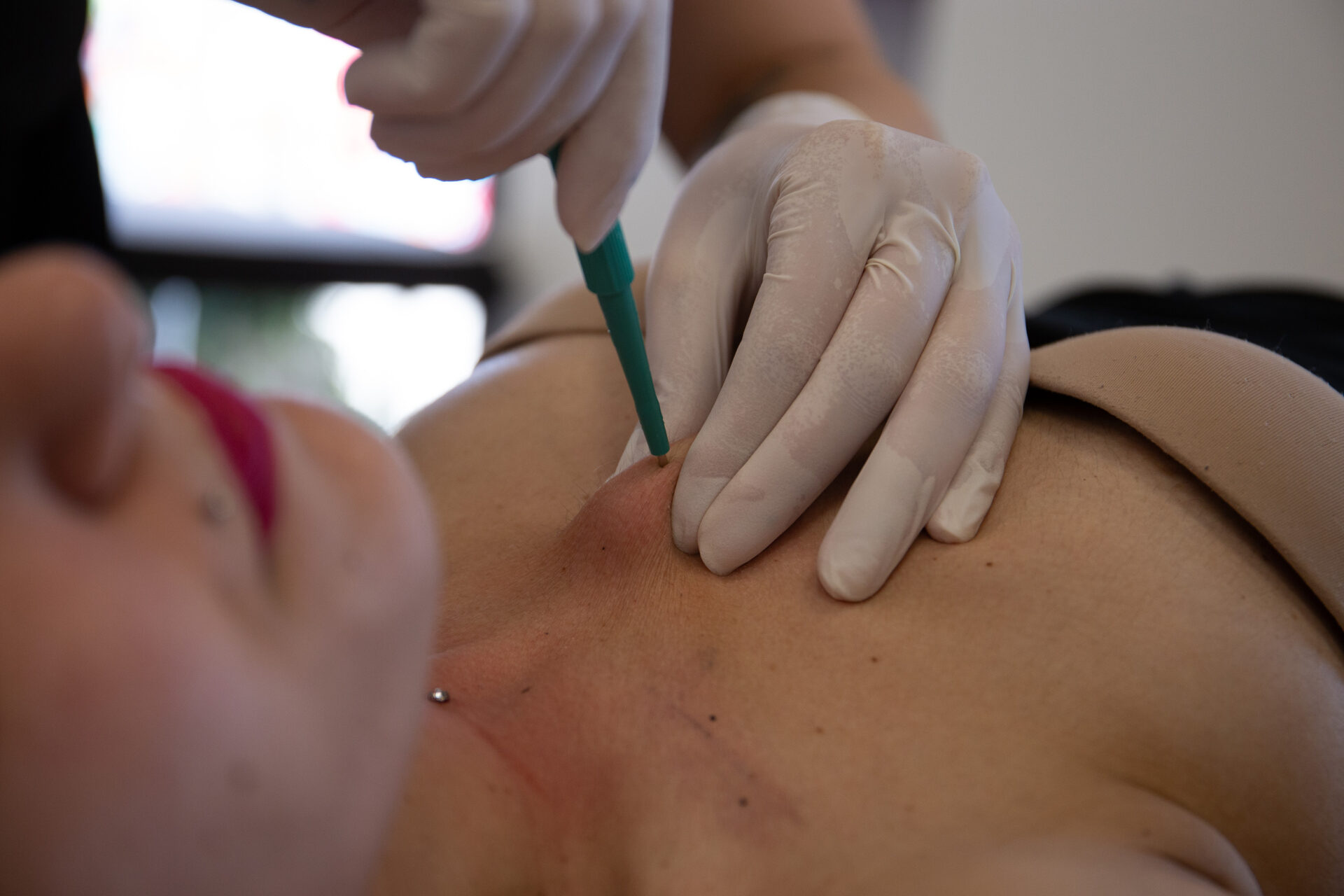
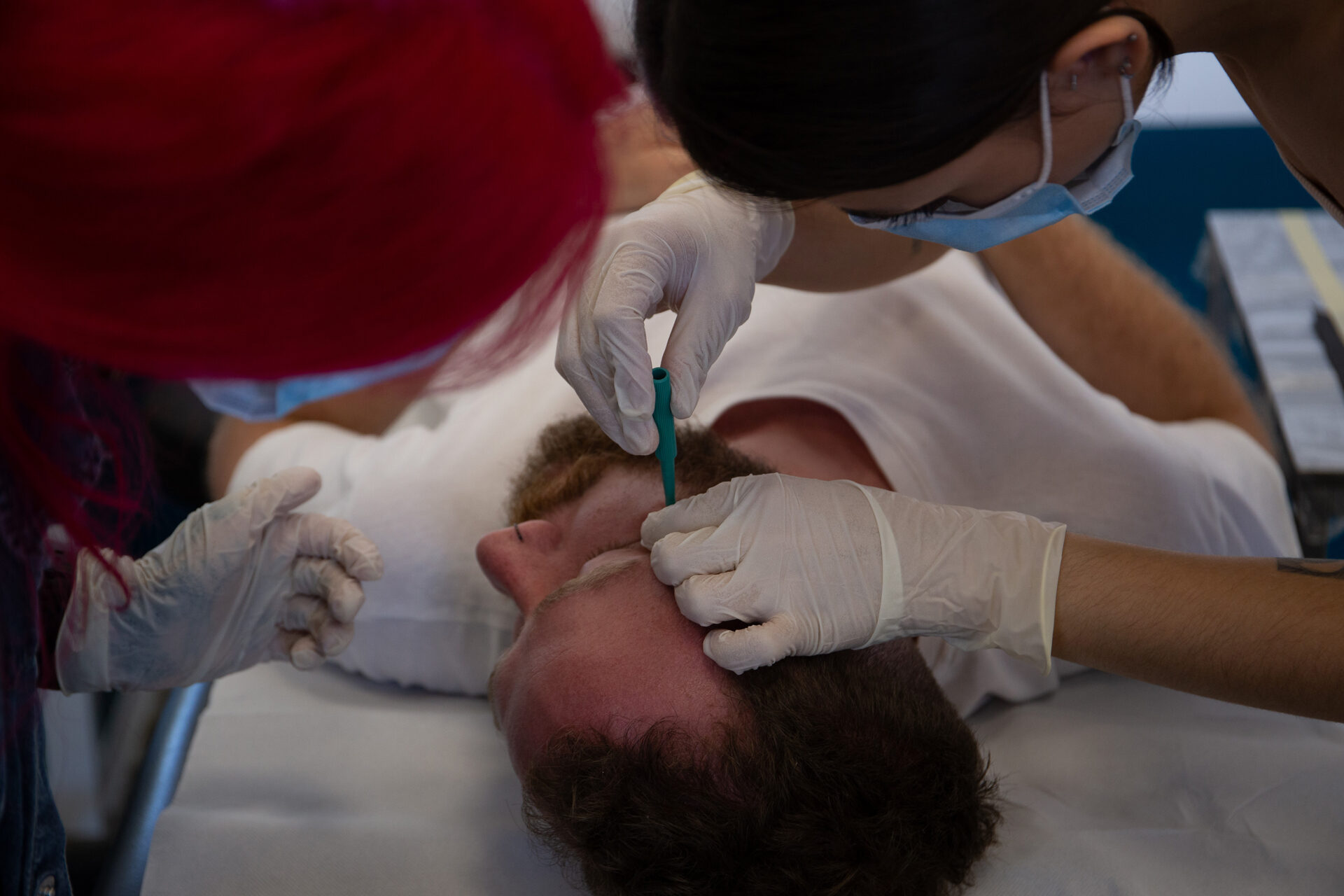
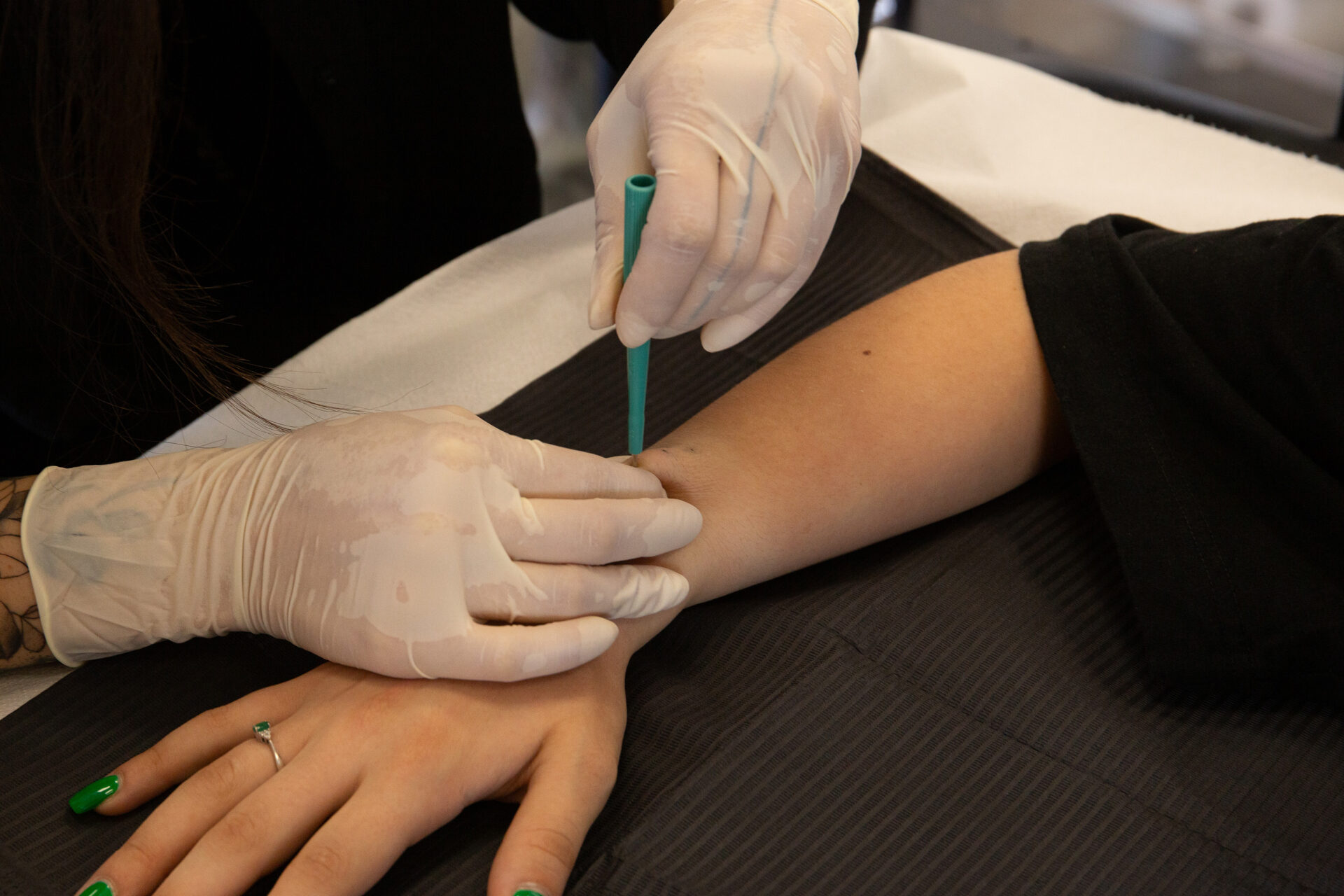
To perform it, a biopsy punch is used, which is a small scalpel with a circular tip and a plastic handle.
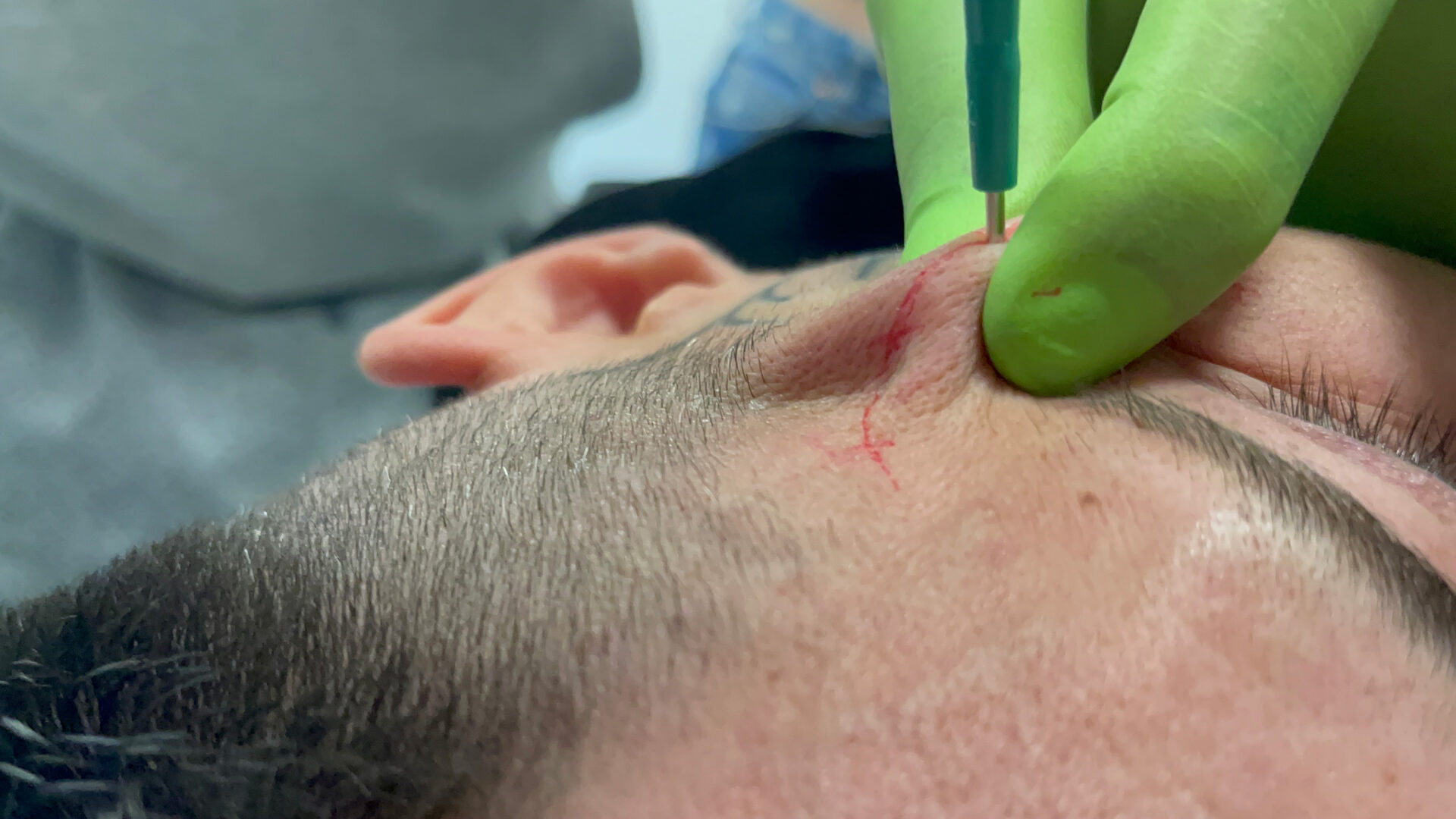
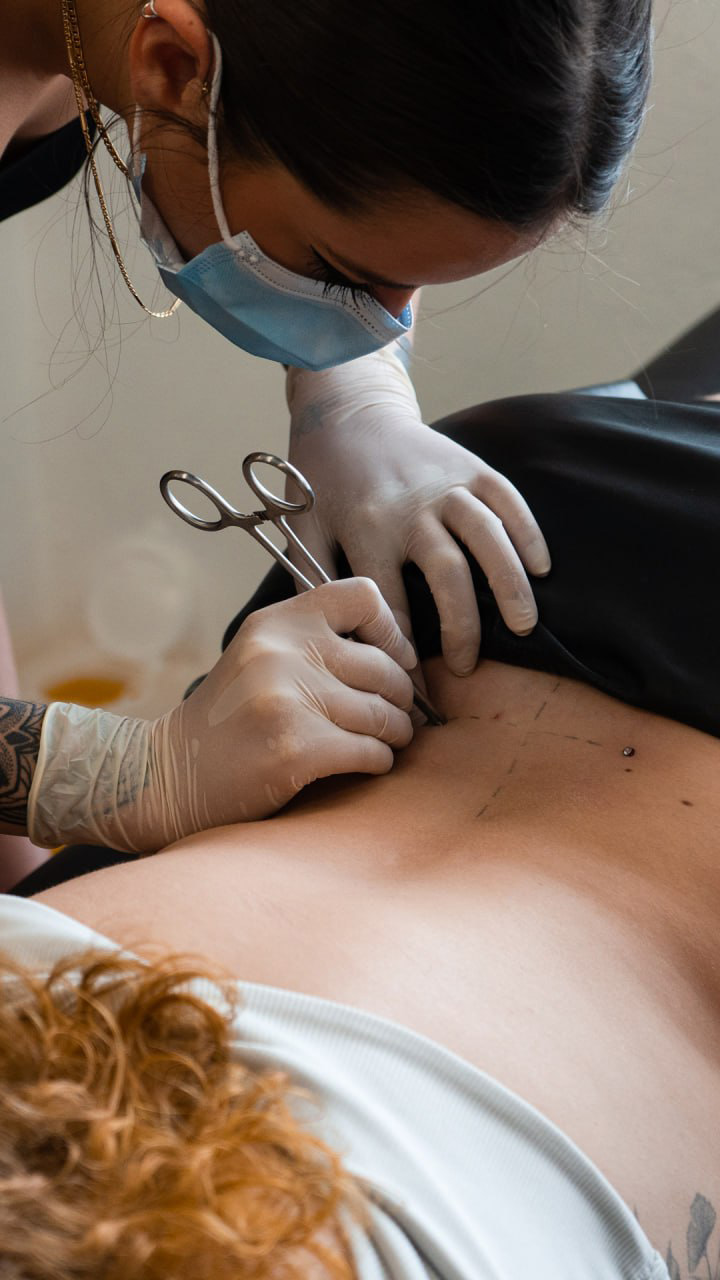
First, the piercer identifies the exact spot where the microdermal will be placed, ensuring there is enough tissue to anchor the jewelry, and marks it.
At this spot, using the biopsy punch, the professional makes a small hole and removes a tiny portion of skin.
This is one of the only piercings that is not performed by passing through the tissue horizontally, but vertically.
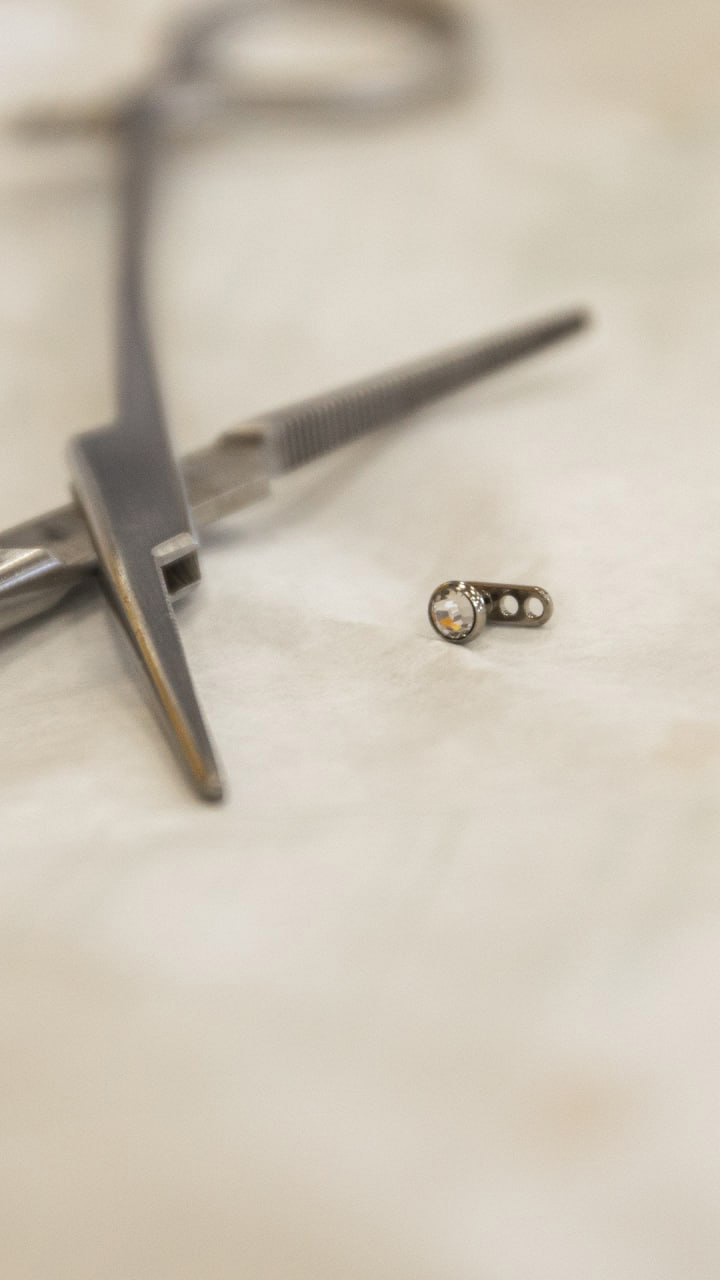
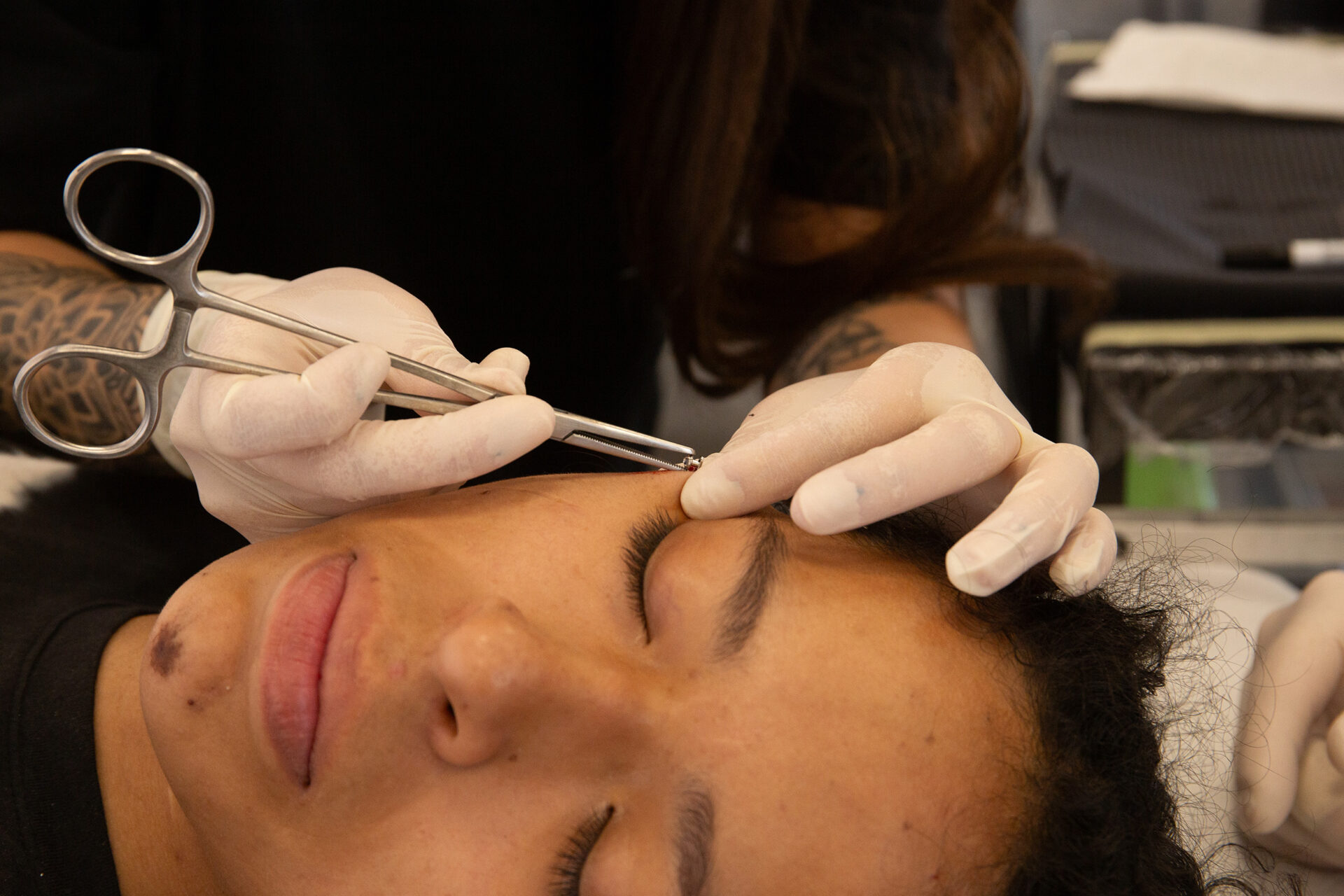
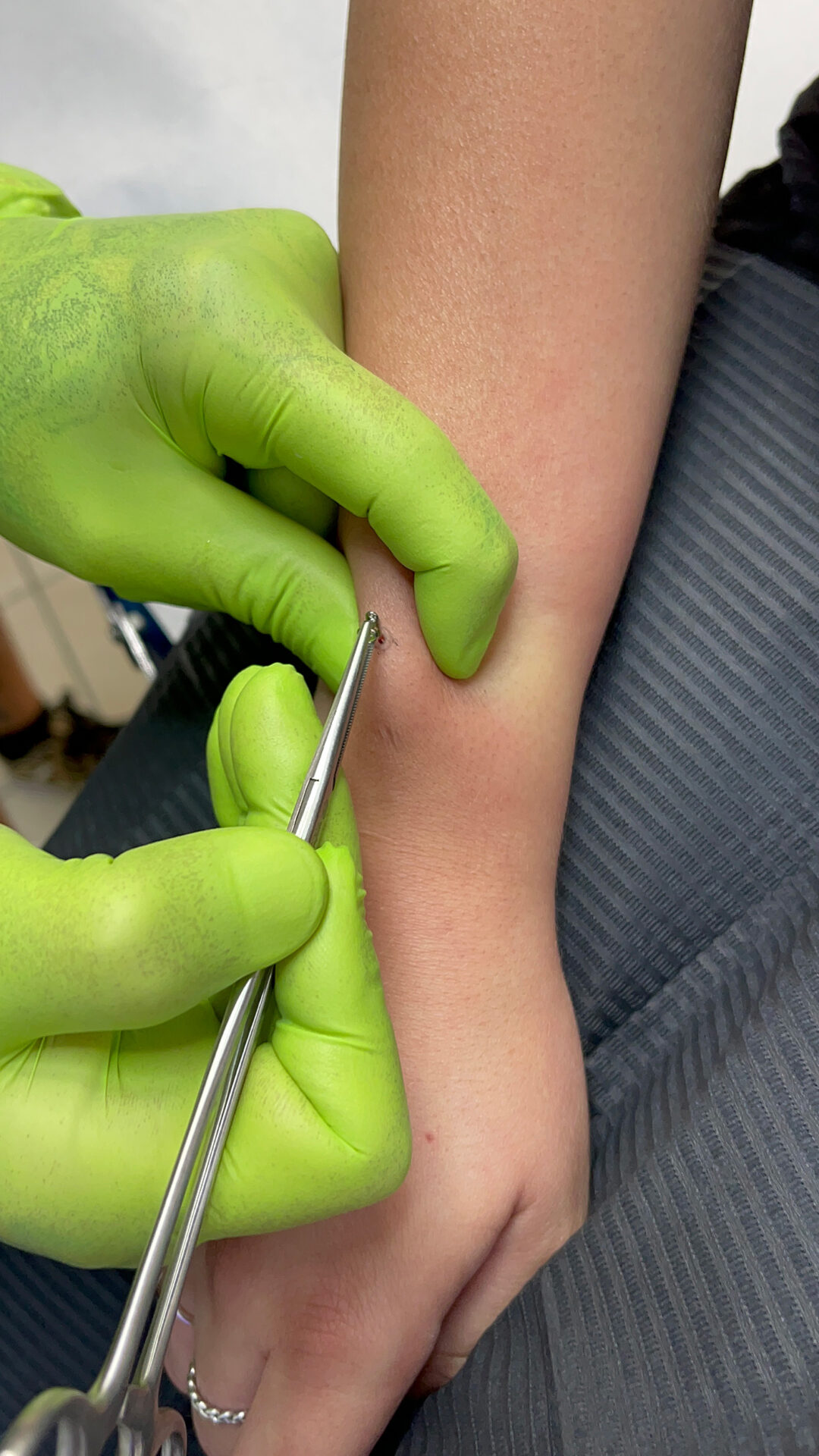
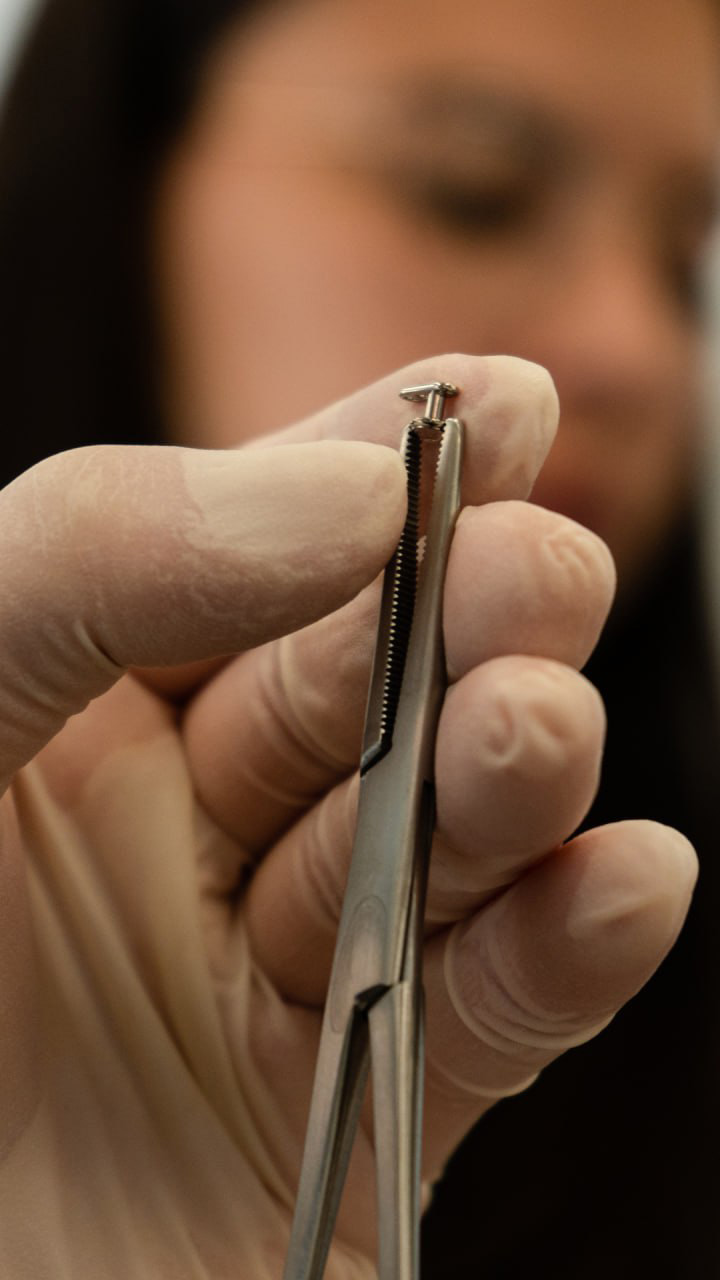
At this point, the piercer, using a mosquito forceps, inserts a titanium plate with 3 holes subcutaneously, into which a visible component (which can be a flat disc or a ball, but is usually a small gem) is screwed.
The jewelry is interchangeable: it is possible to screw and unscrew it to change the piercing with extreme ease, but to do so, it is necessary to go to a Piercing studio, as specific tools are required for replacing the external component.
Microdermal Piercing: Challenges in Performing It and Potential Issues
The Microdermal Piercing is no more invasive than regular piercings, but it should be considered a temporary and not permanent piercing like others: for it to last longer, it is essential that the piercer performing it is specialized in this type of Piercing and that the client takes particular care of it.
The piercer must also be able to advise the client best who wants to get this type of piercing.
In fact, while it is true that Microdermal Piercings can be done in any area of the body, it is equally true that there are parts where it is highly discouraged.
We are referring, for example, to hands and elbows, areas subject to too much movement and joints. The lack of tissue would lead to a “short life” for the piercing, and overly exposed areas risk bumps and snags that would ruin the result.
Care and advice for clients for proper Microdermal Piercing healing
Even post-piercing care must be carefully guided by the professional performing it.
First of all, clients must be informed that approximately 20 to 30 days are needed for the wound to heal, during which tissue will grow into the 3 holes of the Microdermal, and the jewelry will be “anchored” and stabilized.
During this initial period, due to the wound, blood loss is not uncommon, as well as a slight burning sensation, swelling, and redness. The discharge of lymphatic secretion (blood plasma, lymph, and dead cells) is also normal.
It is important to understand that these phenomena do not indicate the appearance of complications, but rather are a sign of the piercing’s healing process.
Furthermore, the piercer must always recommend the correct care to be followed during healing, which consists of:
- disinfecting the wound and performing careful daily cleaning of the area
- avoiding bumps or trauma to the jewelry (during the first week, it is advisable to keep the jewelry covered with a bandage)
- Do not use overly aggressive products such as alcohol, hydrogen peroxide, or Betadine
- do not sleep on the side of the piercing
- do not hook objects onto the jewelry
- avoid immersing the piercing in water (sea, pool, etc.) unless the water is completely clean
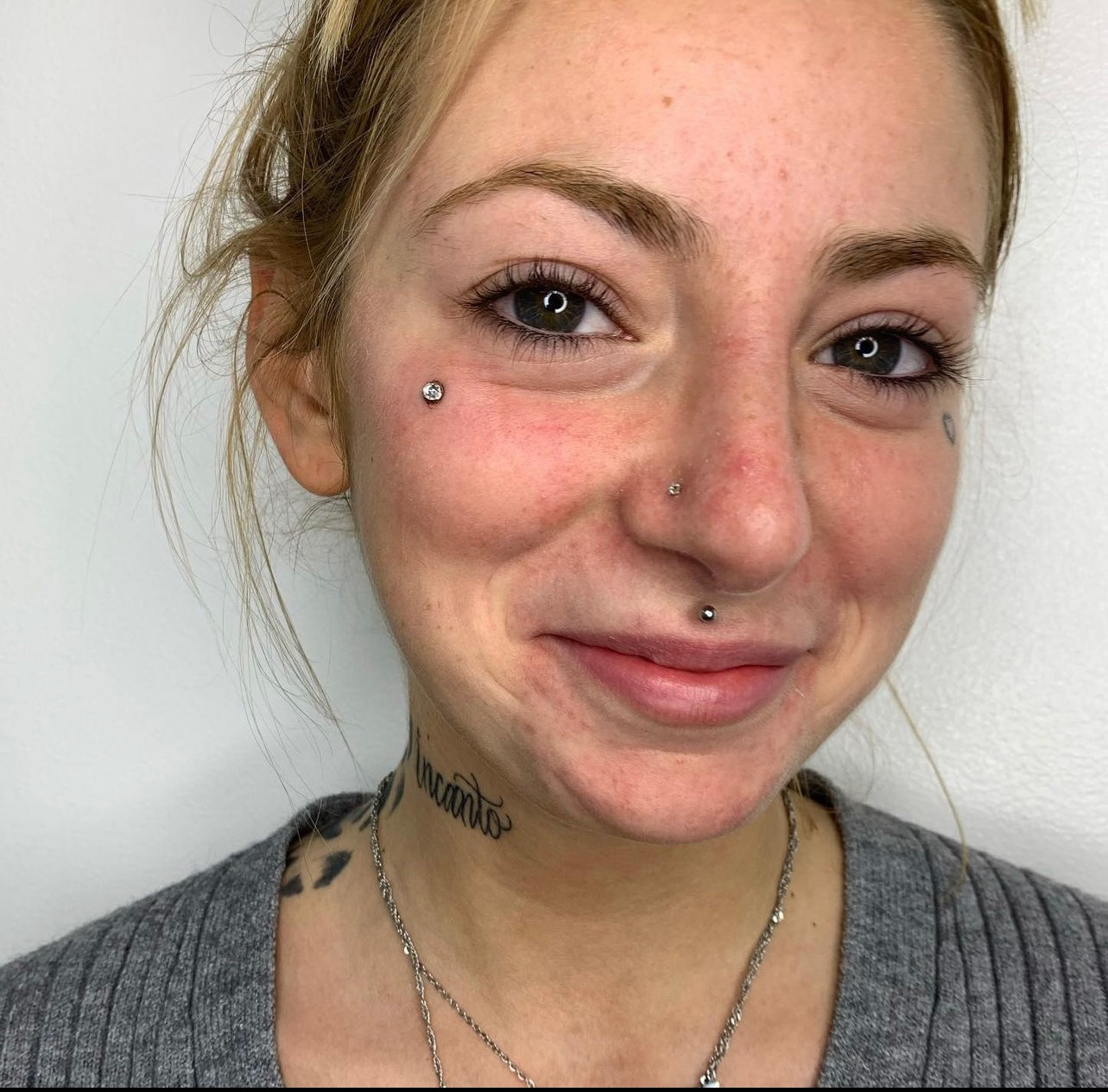
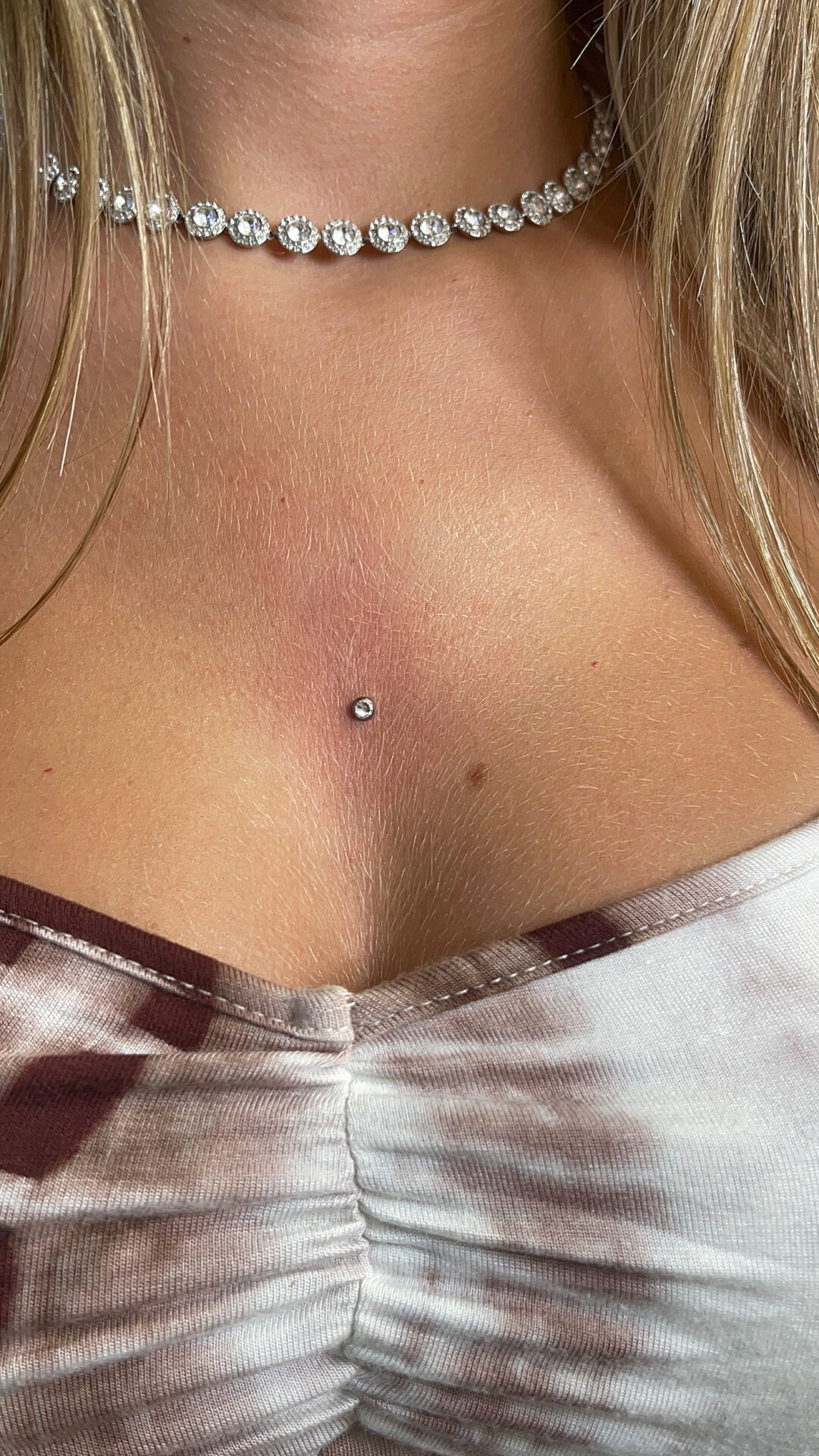
Finally, it is good to know that the most requested positions are cheekbone, sternum, base of the neck, and dimples of Venus.
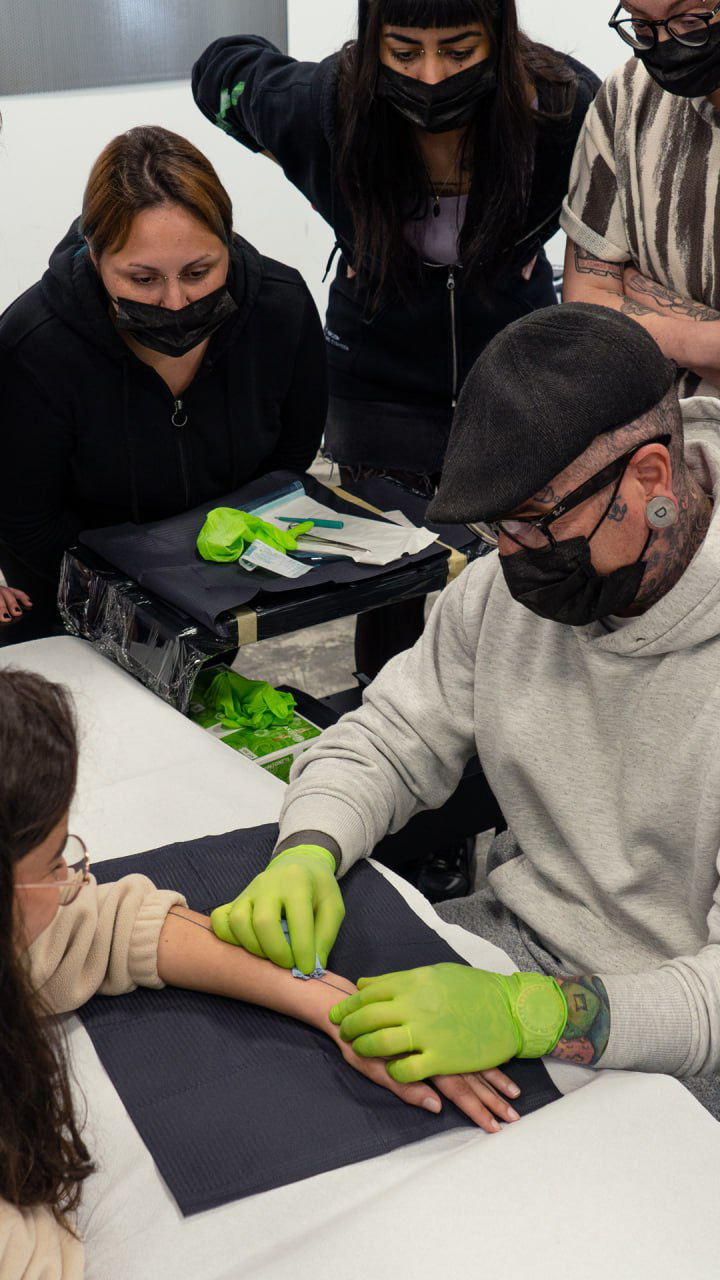
Milano Tattoo & Piercing School’s Piercing Courses to Become Professional Piercers
The first step to becoming a professional piercer is to take the 1500-hour Piercing Operator Course, which is mandatory by law to obtain the Regional Certification valid in Italy and many European countries.
At Milano Tattoo & Piercing School, this course is taught by a Staff composed of 6 professionals in the field of piercing led by Dimitri Daleno, a world-renowned piercer with almost 30 years of experience in the industry.
This is a professional course that provides exclusive, high-level, 360-degree instruction to learn all the artistic, technical, and theoretical skills necessary to perform piercings safely and effectively.
MTS also offers the Technical Piercing Course to those who dream of becoming professional Piercers.
This is a 30-hour course, divided into 4 days of lessons, to learn the techniques and practices necessary to become an expert piercer.
Furthermore, the Technical Piercing Course at Milano Tattoo & Piercing School guides students to develop the main key skills of the professional Piercing Operator and to acquire knowledge and tools for starting a professional piercing business.
The next Technical Piercing course at Milano Tattoo & Piercing School is scheduled from December 11 to 14, 2023, and spots are limited.