
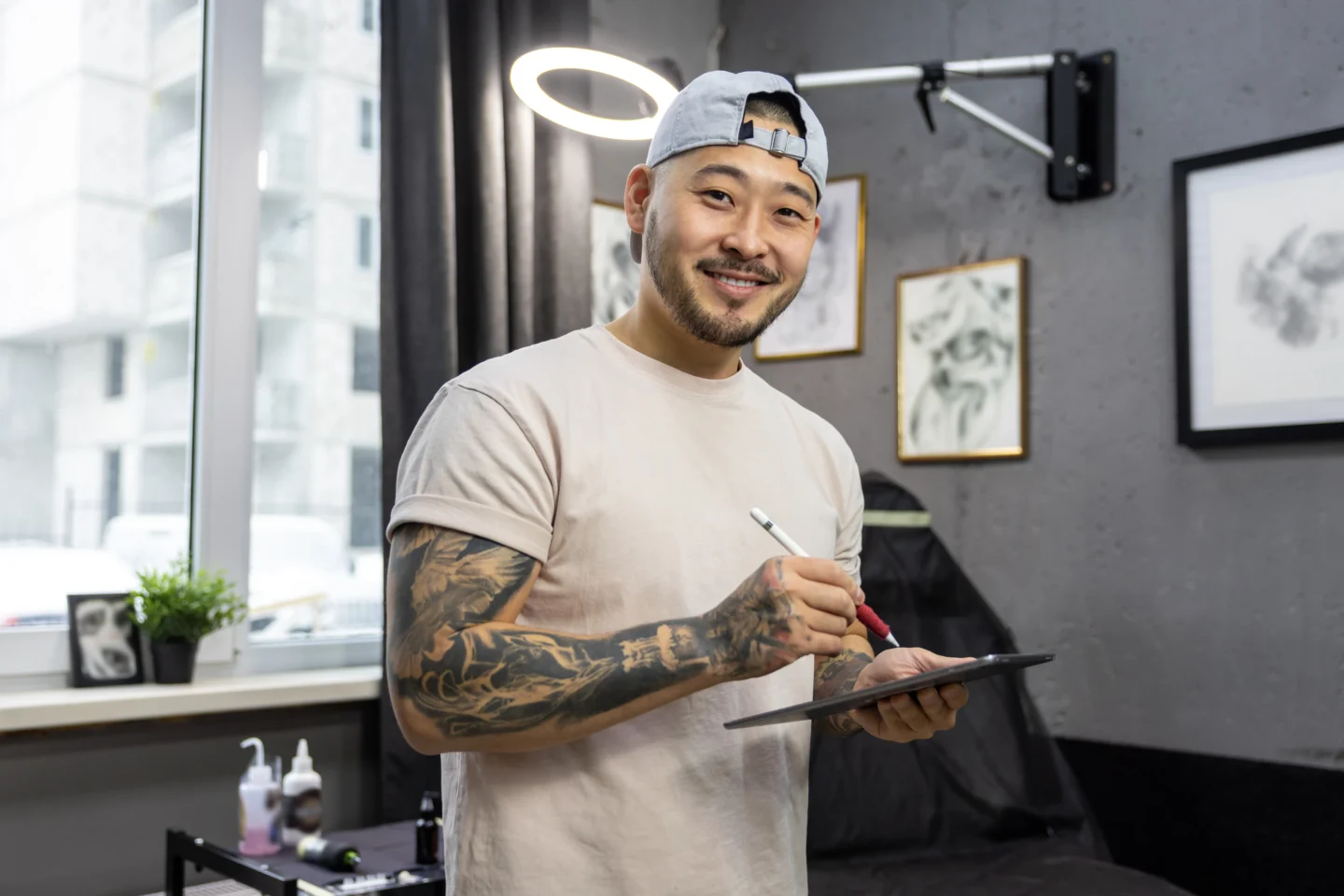
The realistic tattoo is a tattoo style with a great visual impact and one of the most requested genres in tattoo studios.
It is a true body art form that creates designs extremely similar to reality and images that look three-dimensional on the skin.
An artistic style that requires precise details, realistic shading, contrasts, and many layers of color, as it portrays elements that already exist in the world.
The result must be a detailed, clear, and defined tattoo, as lifelike and dynamic as possible, like a painting directly on the skin.
Origin and history of realistic tattoos
The origin of realistic tattoos is linked to the Realism art movement.
We must therefore look for it in 19th-century France, when some artists began to respond to the spirituality, emotionality, and imagination of Romanticism with the affirmation of objectivity, minimalism, and a scientific vision of reality.
They thus began to represent reality as it is, with more “normal” subjects and greater attention to factual data.
In the 20th century, new artists joined the Realism movement but went further, with the idea of capturing reality and reproducing the world in an even more detailed, precise, and meticulous way, starting from a photograph.
This gave birth to the photorealism movement, the art of creating paintings that look like realistic photographs, which in the years to come influenced the world of tattoos and gave life to what we know today as the realistic tattoo style.
Realistic tattoos: characteristics and fun facts
Realistic tattoos require great technical skill and an eye for detail from the tattoo artist.
Artists who practice this style must be able to faithfully reproduce the nuances, shadows, and details of the desired images.
Every tattoo artist prefers a different technique.
Some reproduce the subject in a classic and faithful way. Others “play” more with compositions and fusions, giving room for imagination. Still others focus more on the impact the figure can give and therefore only create large-scale tattoos, big color fields, and strong contrasts, giving less importance to details.
Realistic tattoos can be of 2 types:
- in color, more compact and thick, but also less resistant over the years due to sun exposure; it needs more protection, otherwise it risks becoming too dull and less bright
- in black and white, more delicate and veiled, using shades of gray to create contrast and depth
Tattoo artists specialized in realistic tattoos don’t have a preparatory drawing but start from a photograph as a reference: the higher the quality of the starting image, the better the result of the realistic tattoo.
They then create the stencil based on the image, to lose as few details as possible and create tattoos that look like true artistic masterpieces.
In realistic tattoos, there is no favorite subject: the tattooed images can be of any type and usually have an emotional value for the person getting tattooed.
They can be portraits of loved ones, famous people, natural environments, flowers, etc. Tattoo artists specialized in realistic tattoos can portray anything.
Realistic tattooing is therefore a type of personalized and unique tattoo that always represents something meaningful for the person wearing it.
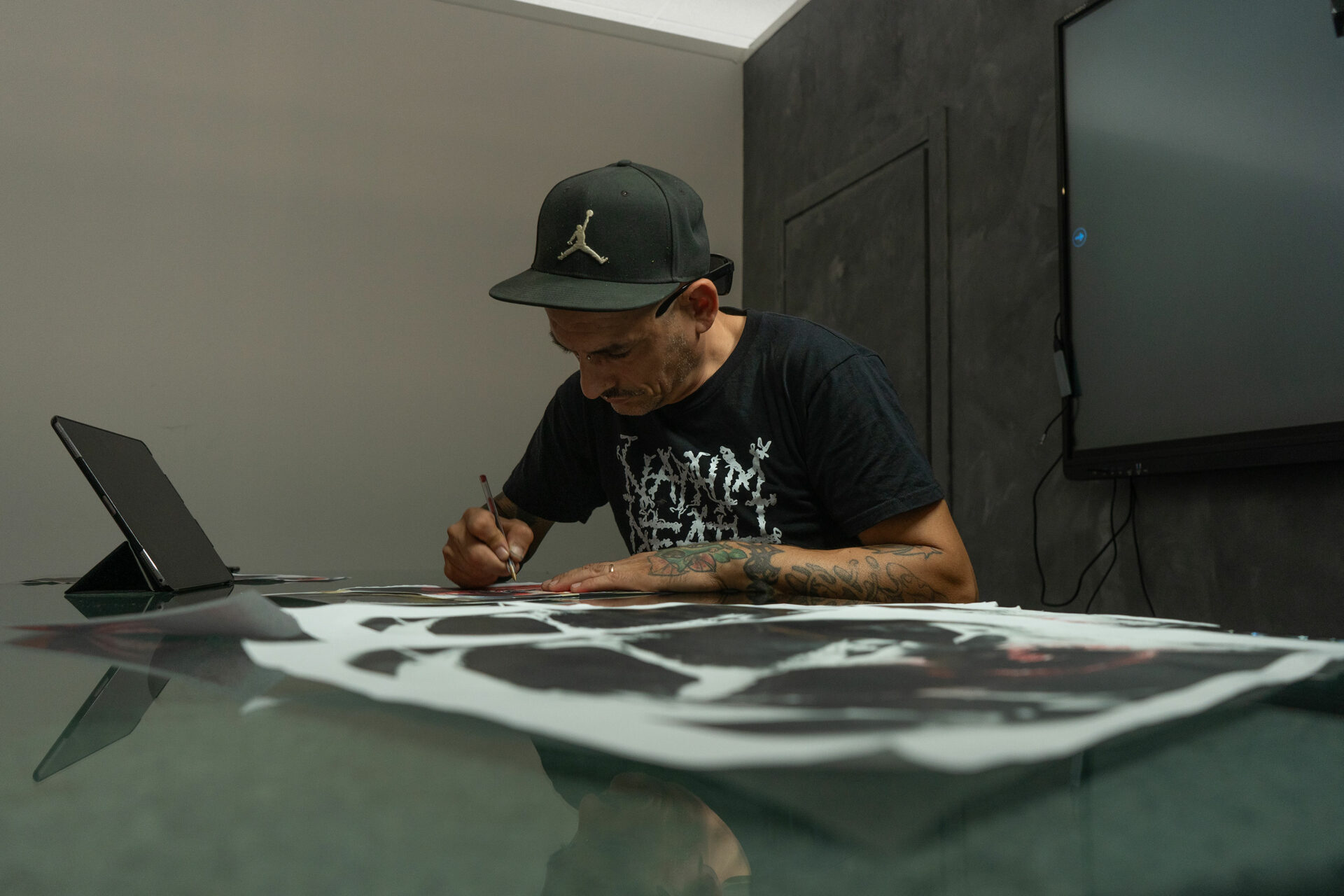
The skills a tattoo artist needs to perform realistic style tattoos
Realistic tattooing requires a high level of skill from the tattoo artist, who must be able to reproduce precise details and realistic shading.
A good knowledge of human anatomy is also necessary to understand the body structure and the correct proportions to position the image in the best way on the client’s body.
Furthermore, the tattoo artist must have great mastery of shading and blending techniques to create light and shadow effects, depth, and three-dimensionality that make the image more realistic.
Another fundamental skill is the choice of colors to faithfully reproduce the desired image: only the right color mix and their correct application allow for convincing results.
Precision is also essential to create clean lines and sharp details in the image. A mistake can compromise the entire tattoo, so patience and attention to detail are indispensable.
Finally, the artist must know how to best advise on cleaning and moisturizing the skin after the tattoo. In this way, the work of art will look its best and last as long as possible.
Professional courses for tattoo artists at Milano Tattoo School
For all artists who want to deepen their knowledge of the realistic style, as well as 30 other different tattoo styles, the Tattoo Operator Course at Milano Tattoo School is the right choice.
It is a comprehensive 1500-hour training path that provides a 360-degree education in the classroom and lab to learn the knowledge and skills necessary to become a professional tattoo artist.
1000 hours of theoretical-practical activities and 500 hours of internship that train students on how to:
- Prepare and manage client reception and assistance
- Organize and maintain the work environment, equipment, and procedures in compliance with hygiene, safety, and environmental protection regulations
- Organize and collaborate in the management of the business activity
- Identify the type of tattoo to be performed according to the client’s wishes and requests
- Identify the type of tattoo to be performed according to their physical characteristics and aesthetic standards
- Perform the tattoo in full compliance with current hygiene and health regulations and as agreed with the client
A high-level training path held by a teaching staff composed of Tattoo Artists with decades of experience in the art of tattooing who actively work in renowned studios, experts in the training field, tutors, and professionals in various disciplines.
At the end of the 1500-hour course, MTS issues a Regional Certification valid in Italy and in many European states.
The next Tattoo Operator Course at Milano Tattoo School starts in October 2023 and available spots are limited.