THE TATTOO MACHINE: ITS ORIGINS
The tattoo machine originated in 1891 when New Yorker Samuel O’Reilly re-engineered Thomas Edison’s electric pen, designed for duplicating documents, to create the first tattoo machine.
It was based on rotary movement technology and modified to introduce ink into the skin.

Modern tattoo machines use a system of
electromagnetic coils that create a linear motion of a metal bar. At the end of this bar are one or more needles which, by penetrating the skin, deposit pigments into the
dermis, a layer beneath the epidermis.
Tattooing is constantly evolving, improving, and changing, and so is the equipment.
Today, different types of machines are available on the market. In addition to the classic coil machine, the rotary machine has been introduced.
A machine that operates with a motor, allowing for movement and speed.
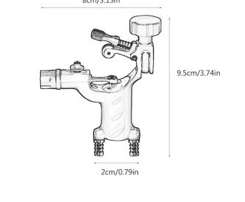
COIL MACHINE VS. ROTARY MACHINE
The coil machine can be adjusted and modified to suit the user’s needs. We can have coil machines set for lining (with a faster hit) and machines set for shading or filling (with a slower setting).
Another difference between the two lies in the type of needle movement. The movement of a coil machine is vertical; the tattoo artist determines the outcome by applying more or less force during the work. The coil machine is entirely controlled by the hand using it.
The rotary machine, on the other hand, is equipped with a motor that determines its speed and rotary motion, which is not modifiable. The user will therefore follow the machine’s movement without being able to determine the final execution of the work. They can only choose the needle’s protrusion before inserting it under the skin.
The advantages of using a rotary machine lie in its weight and practicality, as it does not require special setup maneuvers. The advantages of a coil machine are in the total control of the equipment.
THE MILANO TATTOO SCHOOL
Our tattoo artist instructors recommend the coil machine for lining, precisely because there is greater control in execution. However, they now also routinely use rotary machines for filling and shading, as they find them genuinely practical.
Therefore, there is no single “right” or “wrong” tattoo machine for tattooing; it is a personal choice for the artist to select the type of “brush” that best distinguishes them and makes them unique.
Our school has therefore decided to equip itself with both tools to make them available to students, giving them the opportunity to try them out and decide what feels most natural to them.