

A tongue piercing is a type of piercing that involves perforating the muscular tissue of the tongue using a sterile, single-use cannula needle.
It is performed by inserting titanium jewelry: a barbell with two beads at the ends.
There are also other combinations of piercing pairs, in addition to the classic vertical one:
- Snake Eyes Piercing: a more superficial piercing that perforates the tongue horizontally at the tip
- Venom Horizontal Piercing: the tongue is pierced in 2 points for a double piercing. A single barbell is inserted horizontally from one end to the other
- Marley Tongue Web: consists of piercing the frenulum under the tongue and is done with a curved barbell
- Smiley Piercing: extends from the inner surface of the upper lip to the area between the two incisors, along the body’s midline.
To date, however, the only safe piercing regarding the holes is the classic vertical one. All others are no longer performed to avoid problems and damage to the oral cavity.
Smiley and Marley piercings (which affect the frenula rather than the tongue itself) are performed in addition to the Classic Tongue piercing, but their feasibility must always be assessed based on the area: the frenulum must be developed enough to hold the jewelry.
Tongue piercing: how it’s performed and how to manage Client pain during the procedure
The tongue piercing is one of the least painful to get and fastest to heal.
However, to avoid possible complications, it must be performed by an expert Piercer.
The reason is simple: the mouth is a very delicate area and the tongue is composed of a rich capillary network. It is therefore essential to pay extreme attention to where and how the piercing is made.
So, to avoid potential complications and health problems, it is mandatory to turn to expert Piercers and professional Studios, capable of guaranteeing compliance with all mandatory hygiene and health procedures and regulations.
When performing a Tongue Piercing, the first thing the professional must do is examine the tongue to understand where it is safest to pierce.
Exactly at that spot, a small dot is drawn as a reference mark: the dot is made on both the top and bottom of the tongue.
Every tongue, depending on its shape, has a specific point for placement, so as not to cause problems or discomfort to the oral cavity.
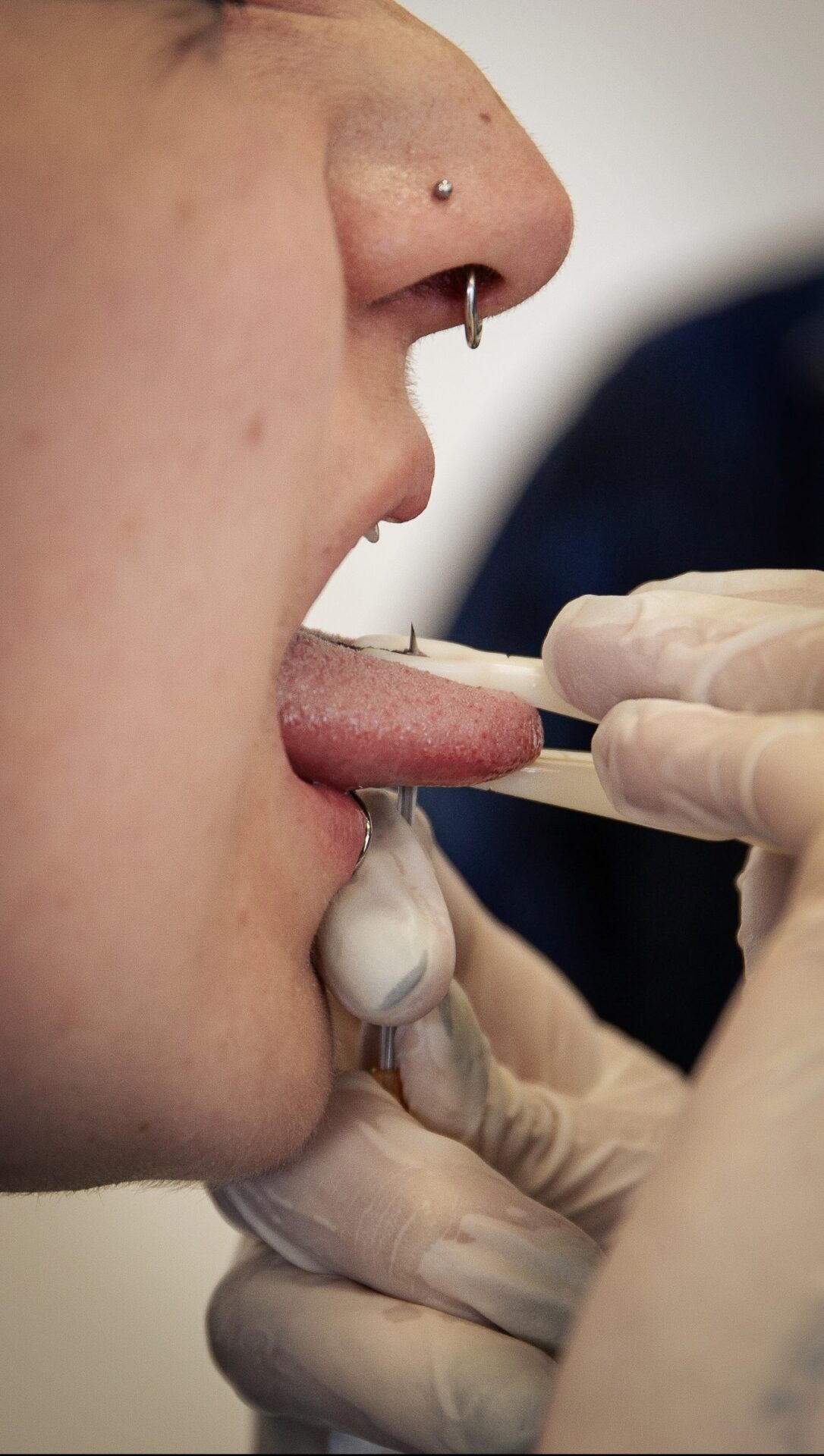
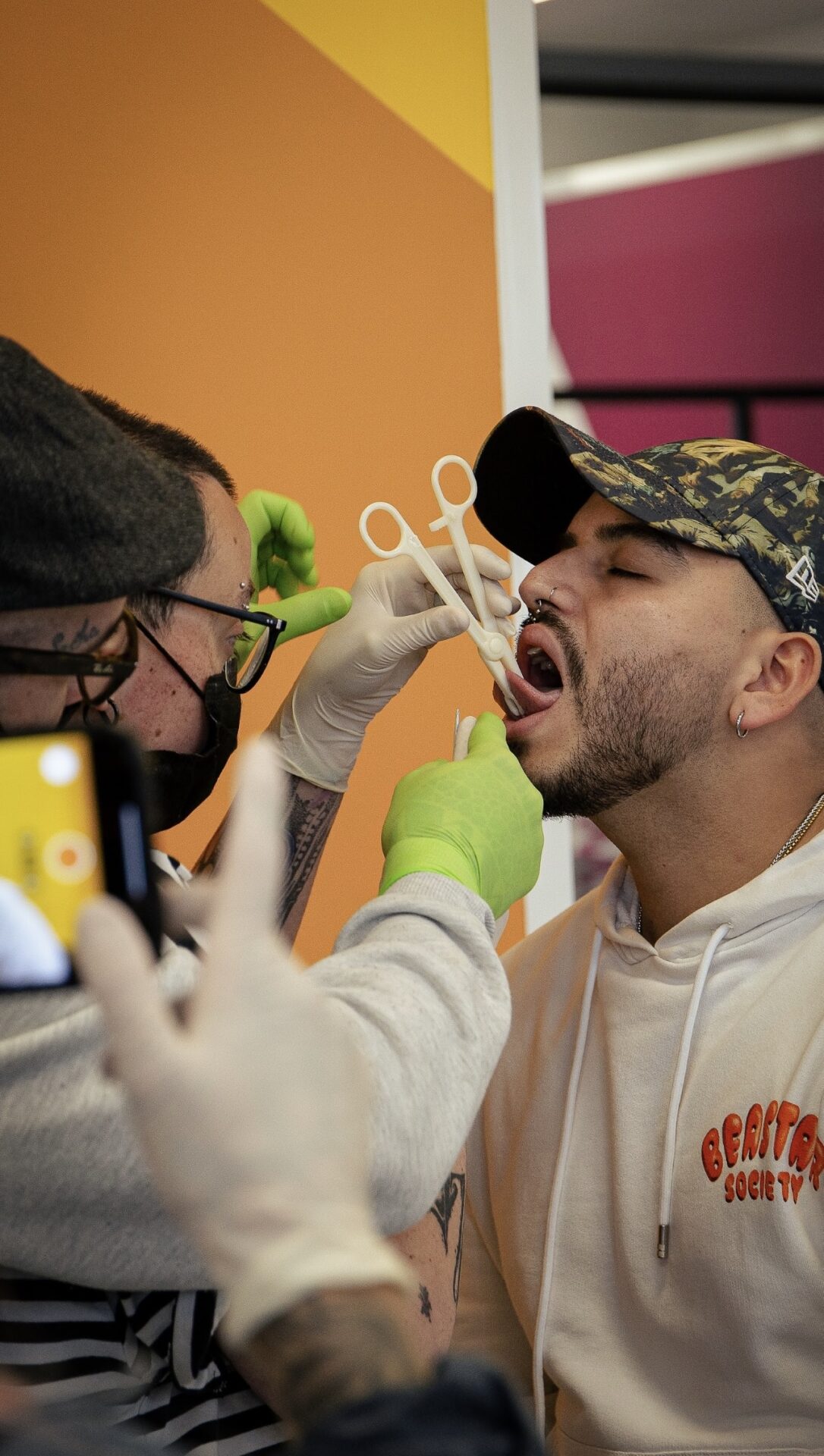
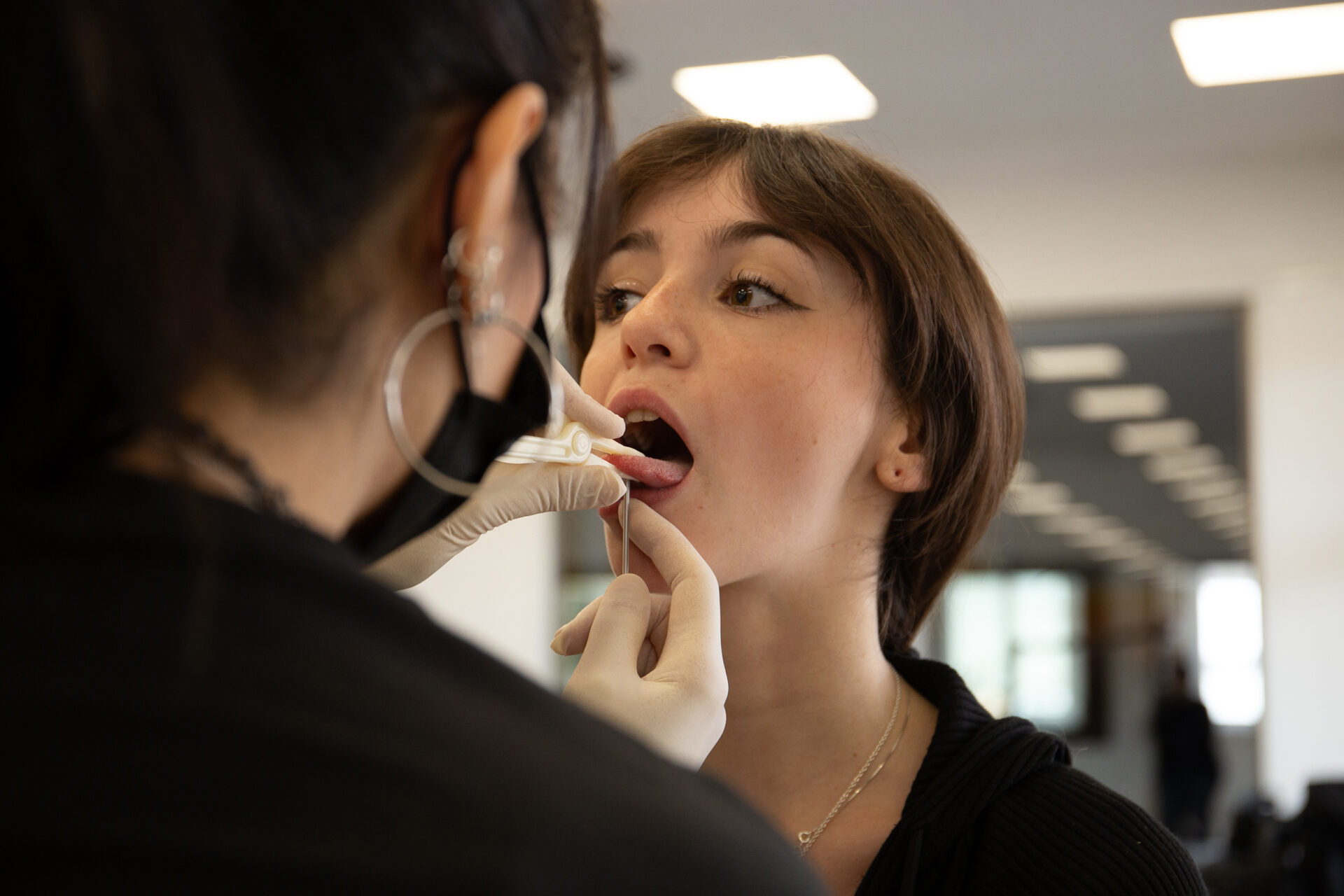
After that, the Piercer has the Client stick their tongue out as far as possible, then “locks” it outside the mouth with forceps, disposable clamps with serrated inner ends for a firm grip.
This procedure serves to keep the tongue completely still without applying too much pressure.
Then comes the piercing, which must be precise and very fast: using a sterile single-use cannula needle, the hole is made, the titanium barbell is inserted, and the needle is removed.
Once the piercing is inserted into the hole, it is closed at both ends with the beads.
Initially, a very long barbell is inserted. Later, when the swelling from the first 10 days disappears, this must be replaced by shorter jewelry.
Tongue piercing: healing, aftercare, and potential issues
Healing times for a tongue piercing are fairly fast.
In the first 3 days post-piercing, there may be some discomfort while eating and speaking properly, while swelling (it doesn’t always swell, it varies from person to person) can last 3 days or slightly longer.
The best way to quickly reduce swelling is to eat cold foods, ice cream and popsicles first and foremost, and avoid hot, spicy, and peppery dishes that could inflame the wound.
It is not unusual to feel a slight sensation of hypersensitivity, as well as mild pain, stinging, and tension for a few days.
There may also be lymphatic secretion, which is fluid leaking from the piercing; this is typical of any wound, not serious at all, and a sign of proper healing.
Unlike other types of piercings, in this case it may be more noticeable because, being an oral area, it has no way to dry out and form a scab.
Tartar buildup on the tongue barbell is also quite common, especially on the bottom bead. In this case, simply brushing the barbell with a soft-bristled toothbrush is enough to return things to normal.
Tongue piercing aftercare
Obviously, when you get a Tongue Piercing, it is absolutely not recommended to smoke, drink alcohol, or chew gum, as they have an irritating effect that would prolong healing times.
Another tip is to rinse with a specific mouthwash and use a soft-bristled toothbrush.
Additionally, it’s important to sleep with your head propped up on 3 pillows during the first few nights to encourage drainage and limit swelling.
As explained previously, when the swelling goes down, it’s important to replace the long barbell inserted at the time of piercing with shorter jewelry.
As with any type of piercing, there are some risks and complications associated with tongue piercing, such as damage to the oral cavity if a bar that is too long is kept in for too long.
Infections, on the other hand, are not that common if the mouth is kept clean, as it is a very protected area.
To prevent the risk of infection, it’s best to maintain optimal oral hygiene and avoid constantly touching the piercing with your hands.
Finally, remember that piercings tend to have a series of ups and downs during healing, and the Tongue Piercing is no exception. It is therefore important to be patient and continue constant and precise cleaning throughout the entire healing period.
Also, it’s a good idea to always carry a spare bead with you, so that if the one you’re wearing is lost or broken, you can replace it as soon as possible!
Become a piercer with Milano Tattoo School’s Piercing courses
For those who dream of becoming a professional Piercer, Milano Tattoo School represents excellence in piercing education.
There are 2 flagship courses that train highly successful new Piercers every year.
The first is the Piercing Technician Course: a comprehensive 1500-hour program, divided between classroom lessons and lab sessions with the performance of more than 50 piercings on people, which opens the doors to the professional world of Piercing.
The Course issues the Lombardy Region Professional Certification for Piercing Technician, valid throughout Italy and at the European level, and provides the knowledge, tools, and skills necessary to independently manage and carry out the future profession of piercing technician.
The second MTS course is the Technical Piercing Course: 30 hours organized in a seminar format that leads students to develop the main key skills of the professional figure of Piercing Technician. Furthermore, it leads to learning all the knowledge and tools for starting a professional piercer business.
Both courses are taught by a faculty of professionals in the piercing field led by Dimitri Daleno, a world-renowned Piercer with nearly 30 years of experience in the industry.
Do you want to become a professional piercer?
Discover all the courses at Milano Tattoo School